Introduction
Human beings have a long history of collecting data, interpreting it and constructing knowledge. They actively transferred knowledge to the younger generation, preparing them to maintain the culture and be more efficient in life (Battiste 2000). The invention of written language facilitated data collection and documentation, contributing to the learning and teaching process. Written records supplemented the limited capacity of human memory and fostered learning. The next generation learns from the generation before them and better understands their social and natural world, improving the social conditions in which they live. For the same reasons, education serves as a vital system through which societies culturally and biologically preserve themselves, embodying values and providing guidance. It encompasses a series of carefully planned actions to modify behaviours and develop social and technical skills. However, under Ethiopian rule, the Oromo people were denied the opportunity to develop their own Oromo alphabet (Hassen 1993) and written literature (Bulcha 1994, 1997).
The etymology of the English word “education” traces back to three Latin terms: educare, educere, and educatum. “Educare” means to bring up or nourish, suggesting the importance of nurturing an understanding of the social and natural world in children and adults while enriching the mind with essential social determinants of learning. “Educere,” on the other hand, signifies to lead out or draw forth, indicating the goal of revealing the inherent capacities of individuals. Finally, “educatum” refers to the processes of training and teaching (“Etymonline,” n.d.). Thus, education fundamentally involves fostering knowledge construction, acquiring knowledge and experiences, and cultivating skills, habits, and attitudes. For example, the Russian term for education is образование, which implies the process of formation, forming, generating, schooling, giving foundation, or background. The other term for it is Oбучение: training, teaching, education, instruction, tuition, schooling. The third term is Воспитание: shaping behavior, breeding, upbringing, training, nurture, accomplishment. The fourth term is Просвещение, which translates to education, enlightenment, illumination.
In the Oromo language, the words that describe education are barsissu – the process of letting know, lenjissu – the process of training, and shakalsu – the process of rehearsing. The words barsissu and baru come from the word barri’u – the dawn which is equivalent to the enlightenment. Two important terms that are related to baru and bekku, which means to know, and bekssisu, to make it known or to discover. For the Oromo people education/teaching are intertwined with raising healthy children. In their prayers the Oromo people often say “let God give you children who are better than you” emphasizing the current generation should be better than the generation before. This entails education like cultivation, fermentation and building process of the young mind and body.
In all cultures education serves both as a process and a product. It involves observation, critical thinking, learning, and understanding of the principles governing the social and natural world. This learning process enhances our inherent human abilities and prepares us to systematically engage with our environment effectively. Education enables us to comprehend ourselves and the complexities of our social and natural surroundings, allowing us to navigate the challenges of a dynamic world. By understanding these contexts, education provides theoretical and practical insights that encourage us to remain vigilant about our environment. Ultimately, education is vital in advancing human society, cultivating individual talents, and fulfilling civic duties, thereby driving social transformation and shaping responsible citizens (Freire 2000; Dei and Calliste 2000).
The World Health Organization (WHO), in its foundational constitution, defines health as “a state of complete physical, mental and social well-being and not merely the absence of disease or infirmity” (Bull WHO 2002; WHO 2021a). This definition is further elaborated in the subsequent Ottawa Charter for Health Promotion (1986). The charter identifies peace, adequate economic resources, sufficient food, secure shelter, quality education, social justice, and sustainable resource utilization as fundamental components for health (WHO 2021a). The Helsinki Statement on Health in All Policies further underscores the necessity for all governmental social policies to consider the health implications of their decisions. It advocates for the development of policies that create synergetic effects and cautions against those that may negatively impact on the health of the population (WHO 2014). Importantly, education is a crucial factor in enhancing society’s ability to effectively tackle modifiable health determinants, as emphasized in the Charters and supported by various scientific studies.
The aspiration to achieve the highest standard of health is a universal ideal embraced by all cultures; however, the strategies used to pursue this goal often reflect diverse cultural contexts. It is crucial to recognize that at the time of the WHO’s founding, many African nations were still under colonial rule, which constrained the development of health definitions and frameworks from African perspectives (Dugassa 2019). The legacy of colonialism has frequently marginalized indigenous health perspectives in global health discussions, often neglecting their needs. Colonialism is associated with indignity, poverty, malnutrition, and homelessness. For those who experienced colonization, it is often viewed as a disease or precursor to disease. This viewpoint highlights the need to dismantle colonial power and adopt a more inclusive understanding of health that considers diverse socio-cultural contexts (Dugassa 2025).
Just as DNA serves as a blueprint for living organisms, the collective worldview of a society encapsulates its identity, values, and aspirations. In the Oromo worldview, the concepts of nagaa (peace) and fayya (health) are intricately linked. Peace is not just the absence of conflict; it is fundamentally tied to haqa (social and environmental justice), tasgabbi (social order), and a harmonious relationship with a divine power. This perspective demands a stable social environment that includes familial harmony, community cohesion, and ecological balance, all while aligning with spiritual principles. Therefore, peace is a vital prerequisite for personal well-being, community health, and public health. The Oromo people, valuing peace and social justice, view any form of aggression, whether overt or covert, as unjust social policies negatively impacting their physical, mental, and social well-being and population health (Dugassa 2019).
Culturally, the Oromo people are distinguished by their emphasis on lifelong learning. The transmission of knowledge is a reciprocal process in which the elder generations, as the custodians of wisdom, play a crucial role in imparting knowledge to the younger ones, thereby creating a dynamic educational continuum. Upon reaching retirement age, individuals often transition to roles as full-time educators, simultaneously embracing the identity of learners as they gain new insights and experiences. One of the ways in which the Oromo lifeline and social fabric was maintained was through their unique knowledge system (Megerssa and Kassam 2019). The colonial education policies eroded the system and were replaced with a system that fostered imperial ideas and structural inequality. Hence, decolonizing education should be about fostering social transformation, correcting historical wrongs, healing past wounds, and integrating health into all policies.
Whether we interpret health from the WHO or Oromo perspective, the causes of health and disease are intricate, influenced by social, ecological, and biological factors, which makes the social justice principle vital (Brady et al. 2020). Understanding these complexities requires communities to cultivate their capacity to understand and address them. This capacity includes social, economic, political, and cultural elements. Education plays a pivotal role in developing these capacities. For instance, establishing a comprehensive social service system relies on adequate economic resources. However, mere economic means are insufficient; effective leadership is essential for directing and coordinating societal transformation. Such leadership entails navigating complex social dynamics and mobilizing collective efforts toward shared objectives. To achieve these aspirations, it is crucial to cultivate a population of educated individuals equipped with analytical skills to understand challenges and meet community needs. These educated stakeholders play a vital role in bridging the gaps between complex health issues and broader societal needs, thereby fostering a more informed and proactive approach to health and well-being.
Education is a cornerstone of public health (Hahan and Truman 2015). Research shows a strong correlation between health outcomes and socioeconomic status, which improves with higher educational attainment. Implementing effective educational strategies for children and promoting lifelong learning for adults is vital for fostering health and prosperity within individuals, communities, and nations. Education not only enhances problem-solving skills but also nurtures a sense of agency and mastery over one’s circumstances, improving mental well-being. Moreover, it broadens employment opportunities, leading to increased job stability and satisfaction. For example, during high school, I facilitated adult literacy programs and met individuals unsure of their children’s ages. Perceptions of time significantly impact decision-making, especially in agriculture, where inaccurate timekeeping can affect farming, planning, budgeting, and be implicated in health outcomes.
A comprehensive understanding of temporal aspects is essential in agricultural practices, as well. For example, knowledge of the duration required for planting seeds before harvesting, the gestation period of livestock, and the lactation timeline of cows is critical for effective farm management. Furthermore, awareness of seasonal cycles—specifically, the durations of spring, summer (the dry season), fall, and winter (the rainy season)—is crucial for resource planning and budgeting. Effective planning and budgeting strategies help families navigate economic constraints and mitigate numerous associated social challenges, such as food insecurity and income instability, which are often exacerbated by poor timekeeping and management.
Another story worth sharing is the concept of time and medical dosage. Someone I know got an infection and ended up in the hospital. The doctor diagnosed the problem and prescribed him an antibiotic for ten days. After three days, his symptoms improved, and on the fourth day, he stopped taking the medication. After five days, his symptoms came back. When asked if he had finished his medication, he said, “No,” and went to his bedroom. He added up the number of days he missed the medication and took five doses at one time, which led to intoxication and another hospital visit. The person can read and write but lacks health literacy.
Education is fundamentally integral to the enhancement of both individual and communal comprehension of temporal dynamics. It equips individuals with the essential skills necessary for critical thinking, effective behaviour, strategic planning, collaborative cooperation, and competitive advantage within increasingly complex social and environmental contexts. The true potential for human development resides within cognitive capabilities (Kennedy 2023). Educational frameworks highlight the significant impact of time on decision-making processes and comprehension, enabling individuals and communities to formulate informed and innovative solutions to the challenges they face.
After considering health from the WHO and Oromo perspectives, let us now delve into public health. WHO defined public health as “an organized activity of society to promote, protect, improve, and – when necessary – restore the health of individuals, specified groups, or the population” (WHO 2021a). Public health aims to foster healthy social conditions for everyone. The field emerged from the understanding that individual efforts alone cannot address all social issues; instead, coordinated efforts within societies can create conditions that benefit all. This discipline integrates knowledge from both social and biological sciences to understand problems and devise solutions. Effectively addressing public health issues requires insights from various academic fields, as well as the active engagement of community members. The quality of participation is closely linked to the education level.
The Oromo culture encompasses various concepts of public health that reflect a holistic understanding of health and well-being. To adequately analyze these concepts, it is essential to synthesize information about the Oromo perceptions of health and disease, as well as their everyday spiritual practices. The Oromo conceptualization of health extends beyond the individual, integrating familial, communal, and environmental dimensions, while underscoring the importance of peace, social justice, and harmony with the Divine. A salient aspect of this holistic approach can be observed in the Oromos’ daily prayers, which include phrases such as “dhukkuba hama nuraa qabi” (prevent us from epidemic-incurable diseases), “beela hama nuraa qabi” (prevent us from extreme famine), and “waraana hama nuraa qabi” (prevent us from devastating war). These invocations reflect a comprehensive aspiration for the public good and a profound understanding of the interconnectedness of health with various socio-economic and environmental factors, illuminating the complexity of public health.
Historical comparisons highlight the sophistication of Oromo public health practices, suggesting a well-developed understanding of social hygiene and environmental sanitation. For instance, while European nations confronted infectious diseases through measures such as quarantine—exemplified by the 40-day isolation of ships suspected of carrying contagion—the Oromo people developed the concept of Wal-laggu, which emphasizes the separation of the sick from the healthy. The methodologies employed by the Oromo in caring for individuals afflicted by infectious diseases bear resemblance to contemporary evidence-based medical practices.
It is crucial to consider the impact of external disruptions, particularly colonial conquest, on the Oromo’s public health evolution. The abrupt cessation of their social development significantly impeded their capacity for learning, teaching, and developing leadership, thereby stymying the progressive advancement of public health initiatives within the community. The Oromos’ historical context highlights both the resilience of their public health strategies and the potential trajectory of improvement that was prematurely interrupted. The colonial conquest not only disrupted their social development but also introduced new social problems such as homelessness, poverty, social and environmental injustice, diseases and complex health challenges. Those realities necessitate the reclaiming of their sovereignty and control over their education system and professionalise public health.
Historically, the evolution of public health has been shaped by community needs and aspirations, guided by empirical observation. Public health focuses on finding effective ways to prevent disease and enhance the population’s quality of life (Tulchinsky and Varavikova 2014). A notable example includes French vintners and farmers working to reduce wine spoilage. Their investment in Louis Pasteur’s research led to the development of pasteurization, which significantly decreased foodborne illnesses (Rosen 1993). Similarly, during the First World War, efforts to mobilize an effective military force brought attention to physical and mental unfitness among young men, resulting in advancements in nutritional sciences (Cronier 2021; Mwangi 2025). These instances highlight the dynamic interplay between societal observation and public health solutions. Such inquiries rely on community intellectual preparedness, positioning education as essential in advancing public health initiatives.
The first part of the paper introduces the objective, then defines education and public health to establish a clear understanding of these concepts. Following this, the historical relationship between education and public health is examined, focusing on how educational attainment has influenced public health development over time. The third part explores the pathways through which education contributes to public health development. Additionally, it closely examines the role of education in promoting health literacy, enhancing understanding of health issues, and fostering healthier behaviors. The impact of education on socioeconomic factors influencing health is also covered, considering how access to education affects income, employment, social status, and health insurance, all of which impact public health. The fourth part takes a close look at EEPs. The fifth part covers discussions and conclusions, summarizing key points and suggesting future policies and practices in education.
Objectives
This research aims to analyze the EEPs and its effects on the underdevelopment of public health in the Oromia region. The primary objective is to investigate whether the education system empowers Oromo students and the community to drive societal change and foster public health development, or if it serves as a tool of control that hinders it. The secondary objective is to raise awareness of education’s potential to empower individuals and promote advancements in public health.
Research Questions
In this paper, I ask and try to answer the following questions: What are the relationships between educational underachievement and the underdevelopment of public health in Oromia? Does the Ethiopian educational system teach children to think more broadly, offer empowering learning opportunities for Oromo students and promote social transformation and development in public health? Are Oromo students underperforming on exams, or is the educational system itself obstructing the social determinants of learning and thereby failing the students?
Methods
This study employs comprehensive knowledge synthesis methodologies to conduct a critical analysis of the EEPs from 1900 to the present. The evaluation is situated within the frameworks of social and environmental justice, as well as public health development perspectives. Knowledge synthesis, defined as the contextualization and integration of findings from individual research studies within the broader corpus of knowledge on a particular topic (CIHR), serves as the methodological foundation for this analysis.
Data Collection
The field of public health science is fundamentally cumulative, which makes knowledge synthesis an essential research methodology (Paré and Kitsiou 2017). In this paper, the terms “data collection” and “knowledge synthesis” are used interchangeably. Knowledge synthesis, in this context, refers to the systematic retrieval and analysis of both historical and contemporary documents that explore the connections between education and health. The data sources considered include published peer-reviewed literature, grey literature, community knowledge, and both qualitative and quantitative data. The process of extracting data from the literature involves gathering relevant information related to education and public health overall, with a specific focus on Ethiopian education policy, utilizing a mapping review method that encompasses works published in this area.
The WHO’s extensively documented report emphasizes that health and diseases are influenced by social determinants and their distribution (WHO 2008). A wealth of evidence from public health literature underscores the importance of education as a critical social determinant of health, revealing that the lack of educational opportunities for the Oromo people contributes to adverse social conditions. Education plays a vital role in capacity building and addressing social determinants of health; thus, the denial of educational opportunities significantly obstructs the capacity development of the Oromo community. A comprehensive review of the EEPs—both historical and contemporary—offers essential insights into its impact on socio-economic development in Oromia and contextualizes the resulting public health outcomes. This perspective highlights the intricate relationship between education, social equity, and underdevelopment in public health within the Oromia region. It is important to note that most of the WHO data does not often provide a regional breakdown for Ethiopia, making it essential to contextualize the data to fully understand the situation in Oromia.
Definitions
In this paper, public health underdevelopment in Oromia is understood as a condition that lacks the necessary infrastructure, resources, policies, and systems to effectively promote, protect, and sustain the health of the Oromo people. Public health underdevelopment is more than a technical challenge; it reflects more profound systemic injustices. It involves a failure to establish and maintain institutional foundations that support overall health, impacting economic productivity, social stability, and human dignity. The extent of this underdevelopment reveals whether the state is investing in health systems, empowering Oromo people to engage civically, and fostering the development of their leadership.
Public Health Indicators
Key indicators of public health underdevelopment in Oromia include: a) weak public health systems with poor infrastructure (such as clinics, hospitals, and laboratories), a shortage of trained health professionals, and inadequate supply chains for medications; b) accessibility barriers; c) high out-of-pocket expenses; d) poor health outcomes i.e. rising child stunting, anemia, high maternal and infant mortality rates and reduced life expectancy; e) neglect of social determinants of health like poverty, inadequate education, unsafe housing, food insecurity, limited to clean water discrimination, marginalization, environmental degradation, and climate vulnerability.
Let us examine some key health indicators in Ethiopia. Life expectancy is 67.8 years, about six years shorter than the global average. The Ethiopian maternal mortality rate is 267 per 100,000 live births, and the under-five mortality rate is 59 per 1,000 live births. The prevalence of HIV is 1.6 per 10,000 people, while malaria affects 79 per 1,000 individuals. The adult literacy rate is 39 percent (WHO), and around 15.8 million people need food aid (WFP 2024). Communicable diseases such as cholera, tuberculosis, measles, and diarrheal diseases, along with malnutrition and limited access to clean water, significantly contribute to Ethiopia’s disease burden. Maternal and child health issues account for over half of this burden. The lack of clean water is also linked to increases in chronic diseases. In Oromia, excessive fertilizer uses leads to chemical pollution in rivers, which communities use for drinking and cooking, posing health risks. Public health issues related to communicable diseases, malnutrition, and inadequate access to clean water are largely preventable. An emerging concern is that the education system has shifted social attitudes, causing some patients to prefer prayer over medical treatment.

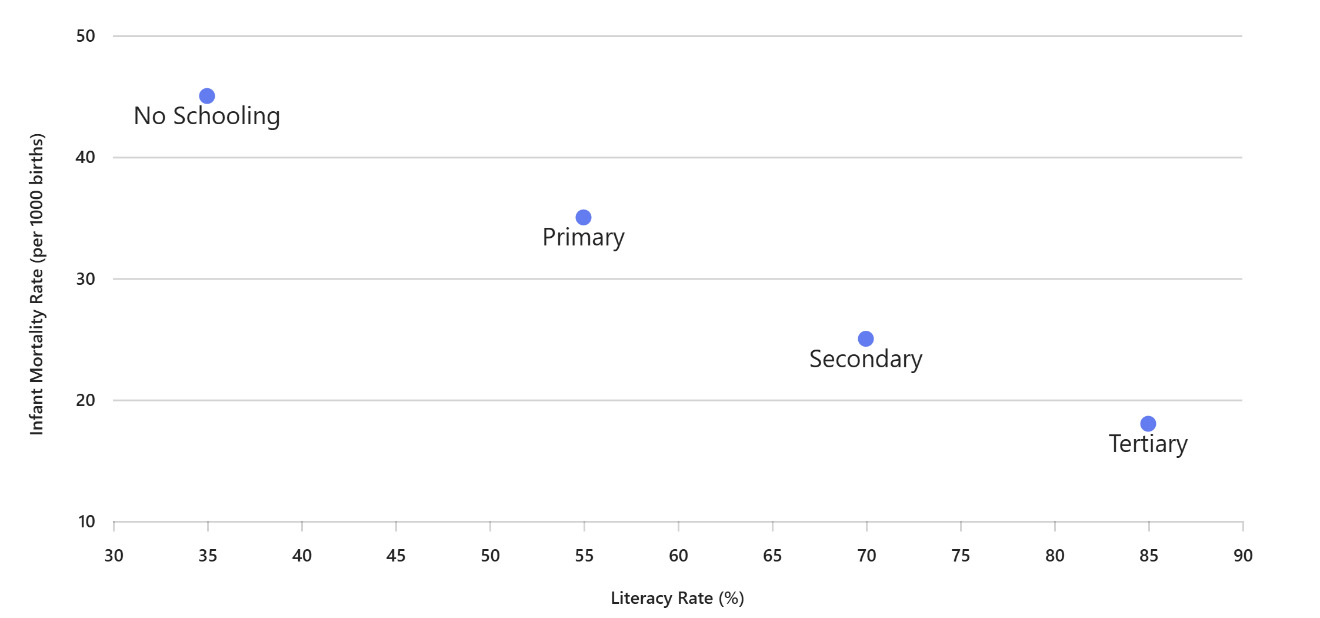
The above figure is generated through Artificial Intelligence (AI) data analysis. The AI-derived data shows that in Ethiopia, the infant mortality rate is about 45 per 1,000 births for individuals without formal schooling. This rate drops to approximately 35 for those who completed primary education and further declines to around 25 for secondary education. For individuals with tertiary education, the rate is about 18 per 1,000 births. This data highlights that education significantly impacts infant mortality rates and underscores the role of discriminatory educational policies in contributing to higher mortality rates.
Historical
The primary objectives of the EEPs in Oromia must be understood within the context of the historical and political dynamics between Ethiopia and the Oromo people. The conquest of Oromia by the Abyssinian king Menelik II, aided by Western imperial interests, led to the subordination of the Oromo population, profoundly affecting their indigenous ways of teaching/learning system (Holcomb & Ibsa, 1991). To consolidate colonial legitimacy, the leaders of Abyssinia adopted the name “Ethiopia” in 1945 (The Daily News 1945), drawing on biblical connotations. The Daily News reported that the country known as Abyssinia officially changed its name and became a new nation. The newspaper congratulated, saying “Happy birthday, Ethiopia.” Following the conquest, the Oromo teaching/learning system was suppressed and replaced with the Ethiopian school system, which the Orthodox Church led. The Ethiopian Orthodox Church emerged as the principal architect of the education system (Mulugeta 1959), which predominantly prioritized the religious doctrines, values, and practices. This system marginalized the traditional Waqeffanna beliefs of the Oromo people, compelling them to adhere to the ethical standards of the Orthodox Church (Dugassa 2020).
Critiques of this ecclesiastically dominated educational model have been articulated by scholars such as Wodajo, who argued that the methodologies and content employed were inadequate for fostering a deep understanding of the world. He noted that these educational practices did not nurture the intellectual capacities necessary for creativity, critical thinking, or imagination (Mulugeta 1959). Similarly, Wagaw (1979) elaborated that the aim of church-led education was not to enhance individuals’ comprehension of their environment but rather to condition them to accept the prevailing social order, preserving inherited norms and passing them unchanged to successive generations (Wagaw 1979, 21). Overall, the EEPs, in Oromia, reflects a historical legacy of colonial imposition that has shaped its objectives and methodologies, often at the expense of indigenous Oromo knowledge and practices.
Does the EEPs enable students to understand their social and natural world and improve their health literacy, economic stability, healthy behaviour and mental health? Education is one of the social determinants of health (Tulane n.d.; HRSA 2004). Education is a process and a product, and it impacts many aspects of our lives that influence our health. It is the process of observing, thinking, learning, and understanding the laws of both the social and natural worlds. The process of education helps to foster the innate capacities and environmental preparedness of people. Education helps us understand ourselves, our social and natural world, and navigate complex, dynamic conditions. Understanding the social and natural world provides both theoretical and practical reasons to be vigilant in one’s surroundings. This means that education contributes to upgrading human capacity, developing personal talents, fulfilling civic responsibilities, and fostering social transformation.
Several official documents elucidate the coloniality inherent in the Ethiopian educational system, particularly notable among them are the 1947 Ministry of Education’s and the final arts formation proclamation. The Proclamation articulates a clear intent, stating, “It is Our desire that Education shall grow in Our Empire and that our People shall progress through Education and … reach a high standard of knowledge.” This Proclamation highlights a hierarchical structure wherein the objectives of education are framed within the directives of the monarchy. It establishes the formation of a Board of Education and Fine Arts, which operates under the direct oversight of the King, indicating that this board plays a pivotal role in the administration and governance of education within the Empire. Furthermore, it emphasizes that the ministry and the broader educational framework are under the guidance and control of the Imperial Government, particularly concerning education, religious, and cultural instruction (Fassil 1990).
A subsequent document of significance is the Proclamation regarding the formation of Haile Selassie University (now known as Addis Ababa/Finfinnee University) in 1961. This Proclamation reveals that the University is constituted by an Imperial Charter, which underscores the continuation of colonial administrative practices. The text outlines the objectives behind the establishment of the University with greater specificity. It mentions that the favor of the King will secure an Imperial Charter “both for us and our successors”, extending to the current and future Imperial authorities. Additionally, it specifies that the University will function as a singular corporate entity, officially named Haile Selassie I University (Fassil 1990).
These documents collectively highlight the interplay of imperial authority and educational governance in Ethiopia, revealing a framework through which colonial ideologies were perpetuated in the nation’s educational institutions. For example, before the students go to class and after they finish, they praise the king and repeat phrases that present the king as if sent from Divine power. Also, children who were not practising Christianity conditioned to pray consistent with the Orthodox church teaching.
Reflecting on my personal educational experience within the Ethiopian school system, I would like to share a particular observation. A student advanced from third to fourth grade after only one semester of schooling. Upon entering the fourth grade, he faced a considerable challenge: his classmates had already been introduced to the addition and subtraction of fractions. The fourth-grade mathematics teacher, who adhered to conservative Orthodox Christian beliefs, maintained that prayer was a solution to all challenges. When the student approached him for help with the topic, the teacher, despite knowing the student did not belong to the Orthodox Church, said, “If you cannot figure it out, pray to the Virgin Mary for assistance.” Accepting this advice, the student dedicated himself to daily prayers on the school campus for over a week, seeking guidance from the Virgin Mary. However, the student soon realized that she appeared preoccupied with aiding others and was taking a long time to respond to his needs. Instead, the student took the initiative to seek help from his peers. One kind classmate patiently walked him through the necessary steps to understand and solve fraction problems. The teacher’s advice, which framed the process of resolving mathematical issues as the work of divine power, left students like this one susceptible to the notion of religious conversion.
Mulugeta (1959) critiques the pedagogical techniques and content, arguing that they are insufficiently designed to foster true understanding or to nurture the intellectual capacities essential for creativity, critical thinking, and imagination. Furthermore, Wagaw (1979) contends that the underlying aim of Church education transcends the mere transmission of knowledge; instead, it seeks to reinforce the existing societal order, advocating for the preservation of longstanding traditions without encouraging inquiry or innovation. This perspective presents a compelling argument about the limitations of an educational system that prioritizes conformity over intellectual growth, thereby underscoring the profound implications of such a framework on successive generations of learners. The critiques surrounding this educational paradigm highlight the significant challenges posed by its narrow focus and its potential to shape not only individual intellect but also societal progress.
The second crucial factor that reveals the coloniality of the EEPs is the language of instruction employed in public and private schools. Until 1992, in Ethiopia, Amharic and English were the primary languages of instruction. The Ethiopian government legalized the use of other foreign languages, such as French, Italian, German, and Arabic, in private schools. However, the use of the Oromo language was explicitly prohibited in public and private schools. This prohibition reflects a broader understanding of the relationships between knowledge and power. As such, the EEPs instituted additional structural barriers that hinder learning and capacity building, disproportionately affecting the Oromo people (Dugassa 2006a). The implications of the policy extend beyond mere educational access. It represents a systemic marginalization of the Oromo culture and identity. The prohibition of the Oromo language not only denied students the opportunity to learn in their mother tongue but also undermined their sense of belonging within the educational framework. Such a discriminatory policy hinders the epistemic curiosity of students. Subsequently, this policy contributed to widening socio-economic disparities.
One significant barrier to education for Oromo students in Ethiopia was the requirement for university entrance exams to be conducted in Amharic. This policy has not only exacerbated existing educational inequalities but also deepened them. A telling example of this systemic bias is an incident where Ethiopian authorities advised an adult literacy program director, General Tadesse Biru, against promoting educational opportunities for Oromo individuals. This episode underscores the deliberate steps taken to limit educational access for the Oromo people (Zoga 1993). Additionally, there are documented instances of pressure on school principals to prevent the enrollment of Oromo students, further demonstrating the systemic discrimination entrenched in the educational system (Abraham 1995). The documented evidence clearly shows that the denial of educational opportunities to the Oromo people is a longstanding policy of the Ethiopian colonial system. Prof. Nega’s actions, particularly his disproportionate failure of Oromo students, are an integral part of the systemic colonial mindset.
To critically examine the impacts of EEPs, it is essential to consider the case of Diima Ngoo, Ph.D., a co-founder of the Oromo Liberation Front (OLF). During his high school years, the discriminatory educational policies required students to pass the Amharic examination at the twelfth-grade level to access higher education, despite the use of English as the medium of instruction. Although Dr. Ngoo successfully passed all other subjects, he did not achieve a passing grade in Amharic. Consequently, he had to defer his aspirations for an additional year to retake the exam. This situation raises critical questions about the personal costs of such discriminatory educational policies, particularly in terms of self-esteem and academic motivation. Additionally, this issue extends beyond the individual level, prompting inquiries into the current educational policies that systematically hinder Oromo students’ access to higher education. Such barriers hinder the development of critical thinkers, innovative problem solvers, and potential researchers and entrepreneurs, who are essential for societal advancement.
Dr. Ngoo’s motivation for establishing the OLF and his extensive involvement in its leadership can be seen as an effort to solve these discriminatory social policies. The OLF’s political agenda, advocating for the self-determination of the Oromo people, represents a crucial step toward addressing social inequities. This agenda prioritizes securing the social, economic, political, cultural, and environmental rights of the Oromo people. The active exercise of these rights is vital for developing capacities integral to public health (Dugassa 2025, 2019). Therefore, it is essential to recognize that policies hindering Oromo students from pursuing higher education not only limit individual potential but also have broader implications for public health advancement in the region.
These factors culminated in alarmingly low enrollment rates; in 1961, the average primary school enrollment across many African nations exceeded 40 percent, whereas Ethiopia’s enrollment rate was a mere 3.8 percent. At the secondary level, the figures were similarly stark, with an estimated average enrollment rate of 3.5 percent for the continent compared to only 0.5 percent for Ethiopia (Balsvik 1979, 6–7). In response to these dire statistics, UNESCO convened a conference in Ethiopia in 1963 to advocate for educational reforms. Subsequently, the Ethiopian government introduced the Education Sector Review policy, mimicking a shift towards addressing these educational disparities (Fassil 1990).
Fassil (1990) conducted a historical analysis and critical appraisal of educational policies in Ethiopia from 1941 to 1975, highlighting the underlying ideologies of these policies and the challenges associated with their implementation. Notably, during a conference of African states focused on educational development, held in Ethiopia in 1961, the literacy rates of various countries were disclosed. This conference revealed that Ethiopia had the second-lowest literacy rate on the continent, surpassing only Niger, while Western Nigeria and Mauritius reported the highest literacy levels. The findings of this report compelled Ethiopian officials to confront the reality of the nation’s low literacy rates, prompting considerations for remedial actions. However, apprehensive about the implications of educating the Oromo people, who are numerically the largest, politically marginalized, and the potential benefits of raising overall literacy levels, the officials deliberated extensively on the issue. A decade later, they introduced the 1972 Educational Sector Review policies, which effectively limited most of the children’s formal education to the fourth grade. This policy not only perpetuated existing social inequities but also exposed an imperialistic motive underlying the educational system in Ethiopia, marginalizing the broader educational aspirations of a significant portion of the population.
Colonial/imperial ideas understand social problems and solutions from a particular lens and context (Baskin 2022; Dei and Calliste 2000). As such, in Ethiopia, the Education Sector Review, while ostensibly aimed at promoting literacy, has been strategically developed to perpetuate structural inequalities within the empire. The review proposed that the Minimum Formation of Education (MFE) consist of four years of schooling, claiming that it is intended to prepare students for life within their communities and to establish a solid foundation for those who would pursue further education at more advanced levels. Notably, the MFE was designed with the expectation that most students would conclude their formal education after the fourth grade.
For instance, during the 1979-88 school years, the strategic plan anticipated enrolling approximately 2 million students in grades 1 to 4, while those advancing to grades 5 through 8 were limited to 220,000 (11%) students; enrollment in high school was projected to be a mere 10,000 (0.5%) students. In the subsequent academic years from 1989 to 1998, enrollment figures showed a notable increase, with approximately 3 million students in grades 1 to 4, 300,000 (10%) in grades 5 to 8, and only 17,000 (0.56%) anticipated in grades 9 to 12. By the academic year 1999-2009, enrollment projections continued to rise, reaching 5.2 million for grades 1 to 4, 416,000 (8%) for grades 5 to 8, and 28,000 (0.54%) for grades 9 to 12. This plan indicates a systematic decrease in student enrollment percentages, despite a growing national population. However, the plan anticipated a significant increase in the number of religious schools, from 838 in the 1979-1988 academic year to 1,518 (176%) in 1989-1998, and further to 2,223 (157%) by 1999-2009. This policy underscores the entrenched stratification within the educational system, which not only defines access to educational opportunities but also reflects broader societal inequalities (Fassil 1990).
The underlying motive of this educational policy does not prioritize enhancing students’ ability to comprehend their social and natural environments. Instead, it aims to ensure proficiency in reading, writing, and adherence to prescribed instructions from authority figures. This approach perpetuates a narrative that diverts the attention of the Oromo people, encouraging a focus on spiritual matters rather than critical engagement with their immediate realities. The revolutionary context of Ethiopia in 1974 seemingly disrupted the original plans for educational review, further complicating the educational landscape.
From 1974 to 1992, the Ethiopian military government was guided by communist-Ethiopianist ideology (Dugassa 2025). Its policies aimed to advance education, which, in turn, facilitated the dissemination of both communist principles and Ethiopianist beliefs, with a particular focus on assimilating non-Abyssinians into the dominant culture. The Oromo people were compelled to learn the Amharic language and culture (Dugassa 2006a). The regime discredited monarchical and theological narratives. Religious teachings rooted in Western thought were portrayed as imperialistic and condemned outright. While the Oromo religion was deemed backward and reactionary, the Orthodox Church was exempt from this categorization (Dugassa 2025). It promoted class struggle, which exacerbated social divisions and fostered a climate of hostility, categorizing individuals into opposing groups of enemies and allies. Instead of using education to foster capacity building, problem-solving skills and critical thinking, it was unfortunately used to foster social instability and hinder the development of social harmony.
Between 1992 and 2018, the Ethiopian political landscape was shaped by the Tigray People’s Liberation Front (TPLF). In contrast to the previous military regime, which pursued policies aimed at the cultural assimilation of the Oromo people into Amhara culture and fostered communist ideology, the TPLF concentrated its efforts on the regional development of Tigray and the consolidation of political and economic authority (Dugassa 2025). TPLF implemented a policy that permitted various ethnic groups to utilize their indigenous languages in educational settings. However, it maintained overarching control over the educational curriculum. The TPLF’s influence extended into educational content, shaping the curriculum to instill compliance and obedience to TPLF directives, rather than cultivating problem-solving abilities and critical thinking skills. TPLF strived to ensure that the objective of education aligned with their political agenda. Despite a quantifiable increase in the number of educational institutions during this period, there was a notable decline in the overall quality of education provided (DeStefano and Bernard 1992).
The Oromo national movement’s actions led to the fall of the TPLF government, paving the way for the group that obediently served TPLF to assume power. Since 2018, the Prosperity Party has been the dominant force in the state’s governance structure. In a move to placate the Abyssinian opposition, the Ministry of Education was handed over to an individual who openly declared his intention to combat Oromo activists and the Oromo national movement significantly contributed to the decline of the TPLF government, subsequently facilitating the emergence of various groups within Ethiopia’s political landscape. Since 2018, the Prosperity Party has emerged as the preeminent authority in the governance of the state. In a strategic effort to appease the Abyssinian opposition, the Ministry of Education was entrusted to an individual who publicly articulated his commitment to countering Oromo activism and interests; this individual is currently serving as Minister of Education.
In various public statements and writings, Prof. Berhanu Nega, the current Minister of Education, has expressed his concerns about the perspectives of young Oromo political prisoners and activists he observed during his time in prison in Ethiopia. He has articulated that he was deeply troubled by the views held by these Oromo activists about Ethiopia and Ethiopianess. Moreover, he indicated that this concern motivated him to move to the USA, where he dedicated himself to establishing a political party aimed at countering Oromo activists/nationalism (Nega 2006). Through these declarations, Nega emphasizes his intentions and highlights the tensions that characterize the Ethiopian political landscape, particularly the discourse surrounding issues of identity, governance, and educational policies.
Our underlying epistemic frameworks continually shape social policies. Through these lenses, policymakers aim to organize society, address various needs, and tackle social disorders (Baskin 2022). Most social policies tend to be incremental, involving minor adjustments to existing frameworks, often driven by the desire to rectify perceived issues (Hill 1997). Prof. Nega embodies the ideas of imperial school thought, where education is explicitly used to promote an imperial agenda. One question we must consider is whether Prof. Nega’s perspective on the Oromo national question informs his rationale for educational policies. If his views exhibit bias, can we anticipate that the resulting educational policy directions will be both just and equitable? The potential consequences of biased policy directions on fairness raise significant social concerns.
Societies built on and shaped by imperial ideas are used to overtly and covertly exclude certain people, utilizing power on an individual, interpersonal, and institutional level. In schooling, those who control the discourse control what constitutes the acceptable knowledge (Burr 2015). As such, since Prof. Nega assumed the role of Minister of Education, the pass rate for the twelfth-grade exit examination has plummeted. For instance, in 2022, only 3.3 percent of students were able to pass. This figure further dropped to 3.2 percent in 2023. In 2024, a total of 674,823 students took the exam, with 324,000 in Natural Sciences (NS) and 360,215 in Social Sciences (SS). Ultimately, 36,400 students passed, representing approximately 5.4% of the total number of students. Among those who passed, 9% were from NS, while 2% were from SS. Notably, among the schools with successful students, a greater number comprised boarding schools, international community schools, Ethiopian community schools, and various private institutions (Press, 2025).
The regional distribution of exam pass rates shows significant disparities, aligning with Minister Nega’s social agenda. Students from Finfinnee/Addis Ababa achieved the highest pass rate at 21.4 percent, followed by Harari at 13.3 percent, Tigray at 12.5/7.2 percent, and Dire Dawa at 6.9 percent. The Amhara region recorded a pass rate of 6.6 percent, while Oromia had a pass rate of 3.5 percent, and the Afar region reported the lowest overall pass rate (Press, 2024). These statistics clearly illustrate the unjust educational policies of Ethiopia. The past influences the present, and, in turn, the present shapes the future. Educational underachievement reflects the underlying structural factors that influence learning. Additionally, the impacts of colonialism can be seen as intergenerational collective violence, and if not addressed, it further erodes the social condition of people.
The interconnection between education and health is well-established, with various studies demonstrating that educational attainment has profound implications for individual and societal well-being. Education serves as a crucial mechanism for broadening individuals’ perspectives, fostering a deeper understanding of social and environmental contexts. This enhanced comprehension not only contributes to improved problem-solving capabilities but also empowers individuals to devise innovative solutions to pressing challenges and to capitalize on emerging opportunities. Historically, the critical role of education in health outcomes is evidenced by the significant changes observed in the early 20th century when life expectancy in Western countries began to diverge markedly from that in developing nations. The Western world, leveraging knowledge from sociological and biological sciences, made substantial advancements in public health measures. These included improved access to clean water, enhanced food security, the provision of safe and sanitary housing, all of which cumulatively contributed to a noteworthy increase in life expectancy and the widening of health disparities (Rosen 1993; Farmer 2003).
Education improves productivity and enhances income. At the individual level, research indicates that higher educational attainment is correlated with healthier behaviours and better health outcomes. Individuals with higher educational qualifications are often better equipped to adopt and maintain healthier lifestyles, as education fosters critical health literacy and empowers them to make informed health-related decisions. Thus, the relationship between education and health outcomes highlights the crucial role of education in enhancing overall well-being across both individual and societal dimensions. Research indicates that education has a more substantial impact on health for women than for men (Zajacova & Lawrence, 2019).
Colonial powers and entities that exert control through unlawful means possess an acute awareness of the transformative potential of education. Knowledge functions as a vital instrument for emancipation, empowering individuals to comprehend their rights, challenge systemic injustices, envision a future of equity, advocate for societal change, and ultimately lead such change. Consequently, these powers often harbour a profound apprehension toward an educated populace, as educated societies are significantly more inclined to assert their rights, critically examine authority, and demand accountability. For the same reason, in the USA, for many years, blacks were forbidden from learning to read, write and attend formal schooling.
The appropriation of education serves as a means of empowerment, equipping individuals with not only critical thinking skills but also the capacity to resist oppression and exploitation. Oppressors frequently exploit ignorance as a mechanism to maintain control and perpetrate exploitation. Thus, access to education emerges as a fundamental catalyst for social transformation. Research suggests that individuals with higher levels of education exhibit greater epistemic curiosity and a stronger willingness to engage in lifelong learning. More importantly, they demonstrate resilience in the face of adversity, a testament to their determination and strength. Actual power, therefore, resides within an informed and conscious populace.
The struggle of the Oromo people for the right to self-determination has elicited a pronounced anti-intellectual sentiment among Ethiopian nationalists. This hostility towards Oromo scholars has arisen mainly due to their articulation of the Oromo national questions, which are the issues of land rights, cultural preservation, and political representation, and their role in organizing and leading their communities. Moreover, the Oromo intellectuals have critically scrutinized and delegitimized frameworks and practices that perpetuate structural inequality, thereby challenging the power and privileges of Ethiopian nationalists. As a result, the Oromo community utilizes education as a form of resistance (Dugassa 2019). At the same time, authorities in Ethiopia perceive the educational advancement of the Oromo people as a direct threat to their colonial ambitions (Abraham 1995; Zoga 1993).
Historical evidence suggests that educated groups have played a significant role in fostering social change. For example, anticolonial, civil rights, and women’s rights movements were often led by educated groups. Mahatma Gandhi of India, who led the Indian national movement to freedom from the British colonial yoke, achieved the core objective of gaining independence. In that treacherous struggle, intellectuals played a vital role. Kuma Nkuruma of Ghana and Jomo Kenyatta of Kenya, who led the struggle for independence, were well-educated intellectuals. Martin Luther King Jr., who led the civil rights movement in the United States, is among the few notable black intellectuals. In the Oromo case, Oromo intellectuals like Baro Tumsa and Abiyu Galata articulated the national question, grievances, and organized the people, leading them. The Ethiopian elites, who feared losing their power and privileges, strive to deny the Oromo people educational opportunities (Jalata 2024).
Education cultivates critical thinkers. Those with critical minds can discern issues that many uneducated groups overlook (Freire 2000). They better possess a deeper understanding of both historical and contemporary social problems and are better equipped to devise effective solutions. From the experience of the Oromo people, the social problems they face, i.e., poverty, illiteracy, and underdevelopment of public health, originated and aggravated by the colonial power relations that they have been subjected to and endured for over a century (Dugassa 2025). Consistent with the works of John Snow, who in 1854 mapped the locations of cholera cases in London, UK and instructed the closure of the Broad Street water pump, effectively controlling waterborne diseases and taught the world (Tulchinsky 2018), Oromo intellectuals need to pinpoint that the colonial power relation is the root causes of all social problems in Oromia and urgently articulate why the Ethiopian government to withdraw its influence from the Oromia school system. Removing the Ethiopian government’s hand from the Oromia school system and replacing it with an Oromo school system designed in their episteme, thereby fostering social and environmental justice.
The dynamics of epistemic racism have significantly influenced Ethiopia’s political discourse, shaping prevailing narratives over time. Let us closely examine the Ethiopia and Ethiopianess that Prof. Nega adheres to and wants to fight against the Oromo activists who advocate for justice. This movement seeks to address both historical and contemporary marginalization of the Oromo people, who have endured systemic disenfranchisement under what can be characterized as Ethiopian colonial rule. From the onset, the term “Ethiopia” derives from a compound Greek word that translates to “people with burned faces”. The term existed in Greek vocabulary for over three millennia (Dugassa 2006b). What stands out clearly is that the terms’ Ethiopia’ is constructs of Europe. According to social anthropologist Gamachu Magarsa, Ethiopia’s identity transcends mere national or ethnic designation; it embodies a complex political project. Holcomb and Ibsa (1990) support this notion, asserting that the architects of the European Empire employed a strategy of indirect colonialism, backing the Abyssinian monarchy in its conquests of neighbouring peoples to consolidate power.
The adoption of a colonial ideology and identity is not limited to Ethiopian elites or Prof. Nega. As Freire (2000) explains, the colonized and oppressed often internalize the interests and aspirations of their oppressors. This phenomenon is evident in the way European empire builders have imposed foreign identities and worldviews on colonized peoples for over a century. In Kenya, for instance, the British employed both formal and informal education to colonize the minds of Kenyans, enforcing a colonial religious identity. Consequently, during the liberation movement, those assimilated Kenyans who had adopted European religions often allied themselves with British forces in opposition to the liberation efforts, rationalizing their collaboration by claiming that the British provided them with a path of hope for salvation—including life after death (Elkins 2014).
If we explore why Prof. Nega, an African scholar, adheres to an identity constructed and imposed by Europeans, while simultaneously undermining the Oromo people’s efforts to assert their collective rights and embrace Oromumma—an Afrocentric identity—two primary explanations arise. First, the professor has uncritically accepted Euro-American discourse and has been conditioned to view the world through their lens. This adopted identity and the political projects stemming from it are validated, leading him to perceive any challenge to these identities or projects as an adversarial threat that he feels compelled to oppose. As Freire (2000) explains, the colonized mind operates with the colonizer’s interests in focus. Second, the political framework and imposed identity have provided him with greater opportunities; as a result, he defends, promotes, and upholds the social structure that has conferred these privileges upon him.
Knowledge, power, and governmentality are deeply interconnected concepts (Burr 2015). It is crucial to recognize that knowledge is not an absolute truth; rather, it is a socially constructed phenomenon that shapes the realities of those who produce it. In an unequal society, this knowledge often determines the domain, objectives, and accepted truths of the dominant group while marginalizing alternative perspectives. The term “ritual truth” refers to the accepted narratives and beliefs that a society endorses, frequently without critical scrutiny. This practice sustains the ruling structures.
The education policies implemented by the Ethiopian government are intentionally designed to generate knowledge that perpetuates assimilation, structural inequality and reinforces the governability of Ethiopia. Rather than promoting knowledge that spurs innovation, enhances service delivery, improves operational efficiency, and fosters critical thinking and problem-solving skills, this educational system emphasizes a framework of rewards and punishments. It tends to reward compliance and submissiveness while penalizing those who challenge structural inequalities.
Oromo students have been engaged in the Qeerroo movement, a youth-led political initiative that played a significant role in ousting the TPLF regime and establishing the current government. This movement arose in response to TPLF policies that legalized eviction, land dispossession, and assimilation of the Oromo people. During this period, schools in Oromia faced major disruptions. To restrict Oromo people’s access to information, the Abiy Ahmed government took the drastic measure of cutting internet access in ten of the twenty-one zones in Oromia. While Oromo students tirelessly advocated for social change and pressured the TPLF to relinquish power—ultimately facilitating Abiy Ahmed’s rise as Prime Minister and Prof. Nega’s appointment as Minister of Education—students in Addis Ababa remained largely passive. Without covering for the lost educational times and providing extra support for the Oromo students, and assessing them alongside those who accepted subjugation, reflects a form of punishment and reward.
The Social Determinants of Learning
Researchers have increasingly focused on the social determinants of learning, emphasizing the need for a comprehensive understanding of the underlying factors that contribute to student success and failure. In this context, the term “social determinants of learning” refers to the various social conditions that either promote or impede educational achievement and shape epistemic curiosity. Gaining this comprehensive understanding is essential to recognizing the inequitable distribution of such factors across diverse regions in Ethiopia.
Levinson and Cohen (2023) and Sanderson, Hollinger-Smith, and Cox (2021) have conducted significant research on the social determinants of learning, delineating a range of social forces that impact educational outcomes. The core social factors identified can be categorized into several domains: a) the physical and psychological health of students, b) economic stability, c) the social environment, particularly in terms of family support, d) the physical environment, including accessibility to educational institutions and resources such as libraries, and e) the educational curriculum, which may reflect social inclusion or exclusion of diverse narratives, alongside the prevailing institutional culture. An accurate enumeration of these social determinants is crucial, as the observed failures of students in the twelfth-grade exit examinations can be viewed as symptomatic of the inequitable allocation of essential social factors necessary for effective learning.
The health status of students, encompassing physical, mental, and social well-being, is not just a determinant but a fundamental part of their learning outcomes. Empirical evidence suggests that adverse health conditions, such as malnutrition and high levels of stress, can significantly impede school attendance and academic performance (WHO 2021b). This underscores the interconnectedness of health and education, and the importance of educational systems addressing health-related issues as integral to fostering effective learning environments.
Research indicates that hunger can severely diminish students’ ability to concentrate during classroom activities (Duflo, Green, & Kremer, 2008). Similarly, heightened stress and anxiety not only divert attention from educational tasks but can also lead to disengagement from the learning process (Chamberlain, 2018). Moreover, the psychological impact of observing community and familial harassment by government security forces can instill feelings of helplessness in children, potentially leading to resistance against perceived oppressive systems (Sotero 2006). Thus, educational policymakers must take a holistic approach that incorporates health and well-being into the framework of educational success.
Learning is the process of discovering meaning in the world around us. We learn most effectively when our epistemic curiosity is ignited, a curiosity that flourishes as we continuously explore our inner selves. The education system, which dismisses the language, knowledge, and voices of the community while promoting imperial ideologies, not only fosters dissatisfaction but also actively obstructs our quest for self-discovery and learning (Battiste 2000). Language and knowledge serve not merely as tools; they are instruments of power. Those who hold authority are more likely to shape societal discourse (Dei and Asghazadeh 2003). Ethiopian cultural assimilation policies are the mechanisms used to undermine the credibility of the Oromo people, stifling social imagination regarding their experiences and reasoning abilities. The exam results from 2023 and 2024 indicate that most students who failed the twelfth-grade leaving exam were those studying social sciences, centred on Abyssinian discourse.
Education as a process and outcomes
The EEPs, significantly shaped by foreign expertise from the early 20th century to the late 20th century, has often implemented top-down educational reforms. Between 1900 and 1974, the predominant influence came from foreign experts, particularly from France, Britain, the United States, and Canadian Jesuits. These educators imparted knowledge and strategies derived from their experiences in colonial contexts, resulting in a curriculum that mirrored those of their respective countries. This top-down approach, prioritizing directives from foreign advisors, has raised questions about the effectiveness of these reforms (Mulugeta 1959; Balsvik 2005; Kebede 2006).
Between 1975 and 1991, the Ethiopian educational framework and curricula underwent significant changes. Communist ideological perspectives heavily influenced the change and were primarily shaped by experts from East Germany. Subsequently, from 1992 to 2018, the direction of education policies was primarily dictated by the leadership of the TPLF and was formulated with minimal engagement from principal stakeholders. This period the education policy was primarily guided by the Prime Minister’s Office.
In the Oromia region, the EEPs has drawn parallels with American and Canadian educational frameworks aimed at Indigenous populations. Both the U.S. and Canadian systems implemented assimilationist policies and residential schooling models, a trend that was similarly reflected in the Ethiopian context. This was evident in the adoption of such assimilationist policies, including limited experimentation with residential schooling. Overall, the evolution of Ethiopia’s educational landscape reflects a complex interplay of internal dynamics and external influences. However, the system does not appear to empower learners and lacks a community perspective. The absence of genuine participation from key stakeholders raises questions about the system’s inclusivity and productivity.
Education and Public Health
Before delving into the public health implications of Ethiopian education policies in Oromia, it is essential to elucidate the methodology employed in this analysis, specifically the knowledge synthesis approach. This method, though not novel, has been utilized for centuries across various academic disciplines. According to the Canadian Institute of Health Research (CIHR), knowledge synthesis is defined as the process of contextualizing and integrating research findings on a particular topic. For synthesis to be deemed rigorous, it must adhere to reproducible and transparent methodological standards. The rigorous nature of this synthesis process assures the readers of the reliability of the research findings, enhancing the credibility of the study.
The knowledge synthesis approach incorporates both quantitative and qualitative methodologies, often taking the form of systematic reviews of diverse sources. At the heart of this methodology are the processes of contextualization and integration. The advantages of employing knowledge synthesis are numerous, extending beyond theoretical considerations to contribute to enhanced efficiency and cost-effectiveness in research projects. In this paper, I undertake a meticulous examination of the role that education has played in enhancing life expectancy in Kerala, India, as well as in OECD countries and the USA, and subsequently draw a parallel to the context of the Oromia region. This thorough examination instills confidence in the robustness of our research and its potential to enrich the discussion on the critical intersection between education policies and public health outcomes.
Education is a crucial social determinant of health (Hahan and Truman 2015). It is equipping individuals with the essential skills to lead fulfilling lives and making meaningful contributions to their communities. Education enhances the likelihood of the person effectively utilizing resources, securing employment that provides a living wage, and residing in decent housing within a supportive neighbourhood. Individuals with minimal or low-wage earnings often face lower socioeconomic conditions, which increase their vulnerability to diseases, mental health issues, and premature death. Furthermore, healthy behaviours—such as engaging in balanced nutrition, exercising regularly, getting adequate sleep, and attending routine medical check-ups—are well-documented to influence health quality, and these behaviours are significantly shaped by one’s level of education. Access to quality education, which encompasses both high school and college, provides learners with opportunities to elevate their socioeconomic status, cultivate stronger social connections, and boost their self-esteem. This, in turn, minimizes the chances of adverse health outcomes, empowering individuals to take charge of their health and overall wellbeing.
The WHO defines health as “social well-being,” emphasizing that it goes beyond merely the absence of disease or injury (WHO 2021a). True health is a harmonious blend of physical, mental, and social well-being, with each aspect closely interconnected. Physical health refers to the body’s ability to function effectively and recover from illness. Mental health involves enjoying life and managing stressors like depression and anxiety. Social health is about forming meaningful relationships and interacting positively with others, which fosters a sense of belonging. Individuals with higher education often demonstrate resilience and adaptability in social situations, making it easier to develop new friendships and communicate effectively. These three health dimensions influence one another; for instance, poor physical health can lead to depression, while mental health issues can manifest as physical ailments. However, education and a strong social support network are vital for enhancing both mental and physical health.
Education is essential for promoting active participation in society, enhancing individual productivity, and equipping people to adapt swiftly in the event of job loss and other stressful events. It plays a vital role in improving health literacy and bolstering community resilience. The relationship between education and health is interdependent; if we plan carefully, they can significantly benefit individuals, communities, and society. Education provides meaning in life, supports human development, and serves as a key driver of social mobility. Additionally, it plays a critical role in reducing inequalities, offering hope for a more equitable future. More importantly, education empowers individuals to actively participate in societal development, fostering a sense of engagement and responsibility. Thus, education not only contributes to better health and well-being but also fosters personal growth and learning, while promoting the development of healthy, resilient communities and economies.
Education and Capacity Building
The term “capability building” refers to the development of skills and knowledge within individuals, organizations, and societies. It is a systematic process designed to enhance and expand overall capabilities. This process involves not only improving existing skills but also acquiring new ones and fostering a mindset that values continuous learning and improvement. Through capability building, individuals, organizations, and societies are empowered to perform specific tasks, achieve their objectives, and adapt to changing social and environmental conditions, ultimately reaching their full potential. The focus of this initiative is on nurturing growth, innovation, and resilience, which are essential to public health development. Education is a vital component of the capacity-building process.
Education enhances the critical capacity of individuals and communities by fostering the development of a) basic skills such as reading, writing, arithmetic, mathematics, listening & speaking; b) thinking skills, which include creative thinking, decision making, problem solving, seeing things with the mind’s eye and knowing how to learn and reasoning effectively; c) personal qualities: responsibility, self-esteem, sociability, self-management, integrity/honesty. For this reason, education is considered an integral part of maintaining good health. The person and community are unhealthy if they lack basic skills, thinking skills, and personal qualities (Hahan and Truman 2015).
The relationship between education and health, particularly within the realm of public health, can be explicated through several interrelated theories. One of them is that education significantly enhances health literacy, empowering individuals to comprehend health-related information and make informed decisions about their wellbeing. This increased health literacy, in turn, contributes to improved economic stability. When individuals attain a higher level of education, they are more likely to secure stable employment, resulting in higher income levels. This economic stability enables greater access to nutritious food, quality housing, safer neighbourhoods, and comprehensive healthcare services.
Moreover, education has a positive influence on health behaviours. Research consistently shows that individuals with higher levels of education are more likely to adopt healthier behaviours, thereby reducing the risk of chronic diseases and promoting overall health. Additionally, education has a salient impact on mental health and social wellbeing. It fosters a sense of purpose, achievement, and self-efficacy, which are crucial for psychological resilience. Furthermore, educated individuals tend to have more robust social support networks, which enhances their ability to cope with stressors and contributes to improved mental health outcomes. Collectively, these factors illustrate the multifaceted ways in which education influences health and public health outcomes (Zimmerman and Woolf 2014).
Many researchers have explored the role of education in health. Findings indicate that education positively impacts health and health behaviours. Educated groups have a better understanding of the natural, social, and political factors that influence health. For instance, in the United States, researchers examined whether higher education provides health benefits. They compared health indicators and behaviours between individuals with less than a 12th-grade education and those with four years of university education. The results reveal that individuals with a university degree have significant health advantages compared to those with less education. Graduates exhibit a lower risk of mortality, heart disease, diabetes, and missed workdays. Additionally, regarding health behaviours such as smoking, alcohol consumption, overweight, and drug use, individuals with four years of university education tend to maintain a healthier lifestyle (Culler and Lieras-Muney 2007).
Education enhances our understanding of the social and natural world, including health and disease, fostering prevention strategies. The research examined the influence of higher educational attainment on health outcomes across OECD countries. By comparing health indicators and behaviours among individuals with varying education levels, the study revealed a trend: adults with higher educational attainment generally experience better health and longer lifespans than their less educated counterparts. Notably, tertiary education has emerged as a significant factor, positively influencing key health indicators, including infant mortality rates, life expectancy, and child vaccination rates. The study also highlighted the role of education in reducing premature mortality. The proposed mechanisms through which education positively affects health are varied, encompassing economic, social, psychological, interpersonal, and behavioural dimensions (Raghupathi and Raghupathi 2020).
Kerala, a state in India, serves as a pertinent case study for examining the interconnections between education and health outcomes. Despite not being substantially wealthier than many other Indian states, Kerala consistently excels in various health and educational metrics. Notably, data indicates that women in Kerala possess higher levels of education compared to their male counterparts, and they effectively leverage this knowledge to address social issues and enhance health outcomes. For instance, significant progress has been made in reducing infant mortality rates and combating malnutrition, positioning Kerala among the states with the lowest figures in these areas nationwide. Furthermore, the population exhibits improved health behaviours, contributing to overall well-being and a reduction in risks. Academic performance among children in Kerala has also been exceptional, as evidenced by sustained high learning outcomes over the past two decades. This comprehensive understanding of the Kerala model highlights the pivotal role of education as a key social determinant influencing both health and learning (World Bank 2024).
Another pathway through which education contributes to public health development are intricate. The primary pathway involves the production and dissemination of knowledge. Knowledge empowers individuals and enhances their understanding of both the social and natural world, while also cultivating problem-solving skills, such as invention and innovation. It promotes emotional awareness, self-regulation, values, and interpersonal skills. The first component is the psycho-social environment, which encompasses an individual’s sense of control, social standing, and social support, thereby reflecting and strengthening one’s capacity and agency. The second component is work, through which individuals can achieve both satisfaction and income, subsequently granting access to various health-related resources. Lastly, cultivating healthy behaviours can protect individuals from health risks and help them navigate the healthcare system effectively.
Religiosity and health
The Ethiopian education system made the people the most religious. Religion plays a significant role in promoting self-regulation and fostering social support, both of which are critical factors in enhancing individual and community health outcomes. However, when religious practices are presented as a solution for all social and economic challenges, they may inadvertently inhibit engagement in critical thinking and proactive problem-solving. The act of striving to understand and address issues is inherently tied to the process of learning; conversely, a lack of such engagement results in missed opportunities for exploration and growth. In the context of Oromia, a growing concern is the commodification of religious practices. The absence of regulatory mechanisms enables the proliferation of false claims that prayer cures all diseases and alleviates physical and emotional ailments (Dugassa 2020). Consequently, there is a trend wherein patients, including those diagnosed with cancer, opt to abandon conventional medical treatment, prioritizing faith over evidence-based medical care.
Discussions and conclusions
In this paper, I critically examined EEPs in Oromia and their public health implications. It assessed whether the education system empowered Oromo students and the community to effect societal transformation or acted to control and exploit them, undermining public health development. Analyzing the objectives of the EEPs, it looked at whether it fosters social transformation and enhances problem-solving skills. The findings suggest that the EEPs primarily serve as a mechanism for controlling and assimilating the Oromo people. Historically, the development of the education system was influenced by external powers, including those of the British, French, American, German, and Jesuit Canadian entities. These colonial powers contributed expertise, advising Ethiopian policymakers to adopt educational policies reflecting colonial experiences, which helped colonize the mind and control the local population, undermining cultural and intellectual autonomy and social wellbeing.
The discriminatory EEPs have significantly contributed to educational under-attainment in Oromia. Education is a crucial social determinant of health. The Ethiopian discriminatory education system creates barriers to public health development. This underachievement results in poor health literacy, limited workforce capacity, and reduced community civic engagement. Evidence shows that individuals with lower education levels are less likely to comprehend health information, leading to poor health outcomes. Insufficient educational attainment impedes communities from producing qualified health professionals, especially those with cultural competence. Furthermore, the lack of educational progress exacerbates structural inequality, negatively impacting economic and social well-being and physical and mental health outcomes across generations and widening disparities.
Education serves as a mental exercise that enables the central nervous system to continuously collect data, organize information, and derive meaning. Just as physical exercise strengthens muscles and maintains physical fitness, education conditions the mind, contributing significantly to mental well-being. As articulated, “there is no health without mental health,” highlighting its influence on both physical and social well-being (Hahan and Truman 2015). Education encompasses not only learning and critical thinking but also reasoning and problem-solving, equipping us to tackle life’s challenges effectively.
If we closely look at the role of education in advancing five vital professions: agriculture, veterinary medicine, microbiology, nutrition, and civil engineering, in relation to public health we clearly observe those relationships. Education equips individuals with the essential tools needed to apply these scientific disciplines effectively. For instance, advances in agriculture improve farming practices and help combat food insecurity. Veterinary medicine plays a crucial role in safeguarding the health of farm animals, which in turn addresses deficiencies in protein, iron, and calcium. A solid understanding of microbiology enables the control and, when necessary, the beneficial utilization of microorganisms. Knowledge of nutritional sciences facilitates the effective use of available resources. Additionally, civil and sanitary engineers play a crucial role in developing clean water supplies and effective sewage systems, constructing safe housing, and designing solutions for food preservation.
Let me provide an example to illustrate how basic knowledge of nutrition can save lives using locally available sources. In Oromia and surrounding regions, infant and child mortality rates are alarmingly high, with many young ones succumbing to dehydration from diarrhea and vomiting. Dehydrated children need electrolyte solutions. Electrolytes are crucial for maintaining fluid balance, supporting nerve function, regulating muscle contractions, and facilitating essential biochemical processes critical to overall health. Key components of electrolytes include potassium, sodium, magnesium, chloride, calcium, phosphorus, and glucose. A homemade electrolyte solution, made from simple ingredients like bananas, salt, and honey (or sugar), can be a life-saving remedy in these regions.
The pervasive intent to colonise the mind and legitimize Eurocentric perspectives has detrimental effects on both learners and society at large. Such an approach is fundamentally counterproductive to the social transformation and public health development that are essential for the well-being of the community. One notable example of this is the early EEPs, which notably emphasized Orthodox Church teachings. These teachings often invalidated indigenous Oromo knowledge systems, particularly concepts centered around living in harmony with both social and environmental ecosystems.
The representation of the Oromo people, who traditionally practice environmental stewardship, as mere “tree worshippers” exemplifies the detrimental effect of such pedagogical practices. This narrative served to undermine self-esteem of people and indigenous ethical frameworks that promote ecological and social responsibility. Consequently, the educational system contributed to environmental degradation, which remains pertinent to contemporary challenges such as food insecurity and violence within the region.
To understand the public health impacts of colonial education in Oromia, it is crucial to examine the experiences of indigenous populations under British, French, and American colonial rule[1].. This analysis is crucial for understanding the complexities of colonial history and its impact on indigenous communities. Colonial education primarily aimed to colonize the mind, control, and exploit these populations, rather than promote healthy living skills. It incapacitated individuals, exacerbated structural inequalities, and undermined their fundamental needs. The system included residential schooling, which forcibly separated children from their families, leading to the breakdown of family units and community ties. This disruption eroded the social fabric that sustained indigenous people for centuries, dismantling traditional social structures and increasing vulnerability to preventable diseases. Residential schooling not only fractured families and communities but also contributed to cultural loss and issues like homelessness, food insecurity, addiction, and mental health challenges.
Education is a fundamental human endeavour that plays a crucial role in transforming and preserving societies. It enables communities to preserve their cultural heritage while cultivating a generation capable of safeguarding the present without compromising future needs. Before colonial conquest, the Oromo people operated as a self-governing nation, demonstrating their ability to assess circumstances and adapt policies (Jalata 2005). However, under Ethiopian rule, the autonomy of the Oromo people has diminished, leading to an education system driven by imperialist agendas. The Education Sector Review policy highlights that the Haile Selassie regime’s schooling emphasized religious instruction to control minds (Fassil 1990) and create pathological social conditions (Dugassa 2025). This focus on religious teaching contributed to Ethiopia becoming one of the most religious countries, fostering societies more engaged in prayer than in critical thinking.
Observations of Canadian tourists visiting Ethiopia provide insights into the competition between religions. The tourists reached their hotel shortly after 1:00 AM and were awakened at 5:00 AM by the sounds of loudspeakers nearby. The teenage children, unfamiliar with it, asked about its source. The parents explained it was the call to prayer from the mosque. The young tourists were surprised by what they perceived as an imposition of religious practices. Soon, they heard another call to prayer, prompting repeated questions from the teenagers and responses from their parents, which was a call for prayer by the Orthodox Church. The teenagers sensed tension between personal rights and religious freedom, stating, “It is their right to pray when they think it is appropriate. Where is my right to rest?”
Those tourists used public transportation to travel. During their first trip, they rode in a minibus owned and operated by a Muslim individual. During this journey, they passively listened to Quranic teachings and songs. Upon return, they took another minibus, owned and managed by a Christian, where they were conditioned to listen to gospel music and biblical teachings. These experiences raise important questions about the expression of religion in public spaces, particularly regarding service provision. Minibus operators, as licensed service providers, should maintain neutrality concerning religious content, ensuring no specific religious teachings are imposed on passengers and respecting their diverse affiliations. Such practices can undermine individual choice in religious belief. Additionally, these observations suggest that both formal and informal educational institutions place a strong emphasis on religious teaching.
The relationship between education and health can be explained through several mechanisms. First, education enhances knowledge about health and diseases, inspires and motivates individuals to make healthy lifestyle choices. This foundation promotes improved lifestyle choices and self-advocacy. Studies show that education is linked to the development of competencies such as literacy and critical thinking, which foster healthy habits that positively influence both physical and cognitive abilities. Second education enhances access to resources. For instance, individuals with higher educational attainment often enjoy better job opportunities, safer work environments, and increased income. This economic advantage facilitates access to better housing, nutritious food, clean water, and safe living conditions, enhancing overall quality of life. Third, education provides knowledge of health risks and preventive measures, leading to healthier lifestyle choices, such as avoiding smoking and healthy eating habits.
Fourth, education equips individuals with problem-solving and social skills that promote social interactions. Educated individuals have a better understanding of their social realities and are more likely to offer practical solutions. They are more equipped to maintain a healthy weight, engage in regular physical activity, participate in social interactions and promote a healthy lifestyle. Their ability to comprehend health information and communicate effectively with healthcare providers enables them to make informed decisions about their health, resulting in effective treatment plans. Fifth, education also prepares individuals and communities to navigate uncertainties and equips them with skills to prevent, manage, and recover from crises, underscoring its vital role in individual and public health. Sixth, ultimately, education is crucial for building resilient societies.
Conclusions
In this paper, I examined both historical and contemporary EEPs to understand their primary objectives, evaluate their effects on the Oromo people, and investigate their role in the underdevelopment of public health. The findings suggest that these discriminatory educational policies are counterproductive to public health development in Oromia. Based on this comprehensive analysis, I present ten interconnected conclusions.
First, education plays a crucial role in equipping individuals and communities with essential skills that promote healthy living. It fosters the acquisition of values necessary for informed decision-making. The public health implications of education underattainment are significant, as they are linked to increased rates of preventable diseases, poor maternal and child health outcomes, limited participation in public health programs (such as health education and vaccination), and reduced community resilience to crises, droughts, conflicts, and climate-related challenges. In Oromia, however, the EEPs are often discriminatory and appear to be misaligned with public health objectives. Therefore, addressing the issue of educational underachievement in Oromia should be viewed as a public health imperative. By investing in an education system rooted in the Oromo episteme, the Oromo people can cultivate healthier, more environmentally sustainable, resilient, and equitable communities. The Oromo people need to integrate education and public health strategies, promoting initiatives that enhance health literacy from early childhood onward.
Second, education plays a vital role in enhancing the social, economic, political, cultural, and environmental capacities of individuals and groups, which are crucial for advancing population health. Empowering the Oromo people to control their education programs, including their indigenous knowledge and practices, is essential for progress. Conversely, the EEPs tend to prioritize control and assimilation over capacity-building initiatives, which is counterproductive to the development of public health.
Third, education creates a vital social ecology in the fermentation of new ideas, the propagation of social justice thinkers and the development of problem-solving skills. However, the Ethiopian school system is not designed to foster students’ epistemic curiosity, critical thinking, and problem-solving skills. As a result, in Oromia, housing and agricultural practices are often outdated, and access to clean water and sanitary latrines is severely limited.
Fourth, education fosters healthy behaviours. Nevertheless, the Ethiopian educational paradigm appears designed to control, colonize the mind, and instill submissiveness in learners, which may hinder the development of autonomy and healthy lifestyle choices.
Fifth, education enhances productivity, economic participation and is essential for empowering individuals to engage in trade/industry activities and elevate their living standards. However, the prevailing Ethiopian discriminatory educational policies, characterized by unequal resource distribution and biased admission criteria, contribute to structural inequalities that disproportionately hinder the economic progress of the Oromo people.
Sixth, education serves as a vital conduit for individuals to engage critically with their social and natural environments, thereby enabling them to navigate challenges effectively and contribute to the overall health of society. Yet the current EEPs in Oromia are not aligned with this empowerment-oriented approach, rendering them counterproductive to public health.
Seventh, the EEPs perpetuates epistemic violence. It normalizes collective violence, legitimizes structural inequalities, and thus exacerbates issues such as poverty, homelessness, food insecurity, and other pertinent public health concerns.
Eighth, EEPs foster an inequitable social structure that propagates injustice. This systemic inequity undermines harmony between different communities and their natural environments, significantly aggravating public health problems.
Ninth, the science of resiliency demonstrates that education is a key factor in enabling societies to recover from tragedy, guiding action to prevent, rehabilitate, mitigate the effects of adversity, and promote population health. Hindering educational attainment is impeding resiliency.
Tenth, considering the identified counterproductive nature of the EEPs in terms of empowering individuals and supporting public health development, these observations should catalyze the Oromo people’s pursuit of self-determination. A concerted effort for complete control over educational policies is essential to instigate positive change.
In summary, the findings underscore a pressing need for a comprehensive re-evaluation of EEPs. The existing framework fails to align with public health principles and neglects to foster genuine empowerment among the Oromo population. The EEPs requires major reform to foster a more inclusive and culturally relevant approach that honours indigenous knowledge and promotes sustainable development. All regions need to have control over their education policies.
The colonial experiences of indigenous people in North America have lasted for over five centuries. The Oromo people have faced similar challenges for about 130 years. I focused on the public health impacts of colonial education and sought to learn from indigenous peoples without making direct comparisons.