Introduction
This study investigates the representation of Oromo religious and cultural thought within the Ethiopian educational curriculum. Historical records demonstrate that the Oromo people practiced indigenous systems of worship and cultural traditions—marked by distinct rituals, procedures, and symbolic actions—long before the introduction of Semitic religions, which were often disseminated through coercive and non-peaceful means. Successive waves of conflict have contributed to the fragmentation of Oromo communities within their traditional homelands (Jalata 2010). Certain scholarly accounts have perpetuated historical and socio-cultural misconceptions, portraying Ethiopian culture and education as being traditionally rooted in Christianity and Islam (Dagne 2015). Another prevailing misconception—one that significantly diverges from the lived reality—is the notion that modern Ethiopian education has consistently served and nurtured the cultural and historical foundations of its diverse populations (Dagne 2015, 1–5).
From its inception, modern education in Ethiopia was designed to support a centralized administrative structure that stood in contrast to the country’s traditional egalitarian systems, shaped either by external pressures or internal bifurcation (Kufi 2024; Kassaye 2025). Kufi (2024, 4) offers a critical review of Ethiopian modern education, arguing that it has largely neglected the broader social and cultural landscape, relegating indigenous cultural and religious assets to the margins—described metaphorically as “seeds in the backyard.” Kassaye (2025) emphasizes the need to Ethiopianize the national curriculum to better reflect local cultural contexts; however, the author does not specify which cultural traditions are to be foregrounded. This ambiguity underscores a broader issue: despite its formal establishment in 1908, Ethiopia’s modern education system has yet to be meaningfully infused with indigenous cultural substance. That is evidenced in Bishaw and Lasser (2012, 2) as:
Emperor Menelik II strongly believed that the building of Ethiopia as a modern state, as well as the strengthening of existing political power, necessitated the introduction of modern education. It was believed that the country’s independence could be linked to an educated populace that was fluent in foreign languages. Consequently, the curriculum included such languages as French, Italian, English, Arabic and Amharic.
In the time of the feudal emperors, attention was given to unity at the expense of diversity. Under the spectacle’s unifiers, Ethiopia was a country taken as a melting pot rather than a diversified whole. The languages, culture, history and belief system were overrun for the best achievement of unified administration and modern economy, which highly depended on foreign policy and expatriate advisors. Negash, supporting the above assertion, has the succeeding points to trace:
The Emperor [Menelik II] and his government might have believed that they were laying down the foundations for the modernization of the country but they did not pay enough attention to the communication gaps between the generations that modern schools were creating. In practice, the Ethiopian government had no coherent strategy. The curriculum was ad hoc and left to teachers who came from different countries with different backgrounds (Negash 2006, 13).
Further evidence underscores that the inception of Ethiopia’s modern education system was primarily oriented toward establishing a centralized administrative structure and advancing economic modernization along European lines (Teffera 2005). Consequently, examining the extent to which Oromo indigenous knowledge has been recognized and integrated into educational practices emerges as a timely and critical area of inquiry. Using the Oromo as a baseline case for analysis is both deliberate and significant. Historically, Oromo society has maintained a distinct way of life that clearly articulates the identity of the Oromo people and the cultural essence of Oromummaa (being Oromo). The Oromo have demonstrated a profound commitment to humanistic values by integrating non-Oromo individuals through three culturally embedded practices: Guddifachaa (adoption), Luba-Baasa (ransoming), and Moggaasa (renaming). These practices reflect a deeply rooted ethos of inclusion and social cohesion within Oromo tradition.
It is also evident that adherence to Christianity or Islam has not historically created sharp divisions among generations of Oromo in terms of culture, language or national identity (Jima 2021). However, Oromo unity has, often, been undermined by ruling authorities who employed “divide and rule” strategies which created internal fragmentation. Despite historical divisions and exploitation by both the former Christian kingdom and Islamic influences, Oromo Religion has endured vanishing. However, due to its primarily oral mode of transmission, it has likely lost many of its original symbolic and conceptual representations (Jalata 2010, 9).
The Oromo belief system and worldview are grounded in reverence for the Almighty (God) and a profound respect for humanity. According to Badhasa Gabbisa (2016), the Oromo religious tradition aligns with those of other African communities who recognize God’s power to create, nurture, protect from harm, and sustain the reproduction of humans and other species. The Oromo conception of God and nature is articulated through the notion of Waaqa Tokkicha—He Who precedes all existence. Waaqa is Uumaa (the creator of all things), Hunda Beekaa (omniscient), Hundaa Tola (omnibenevolent), Hunda Danda’aa (omnipotent), the source and lover of Dhugaa (truth), and Qulqulluu (pure). Waaqa is intolerant of injustice, crime, sin, and falsehood. Notably, the Oromo have never worshipped carved statues, trees, rivers, mountains, or animals as substitutes for the divine.
In the realm of education, Oromo religion has received minimal recognition due to the country’s longstanding marginalization of indigenous knowledge systems and customary resources. That at large followed governors’ imposition on indigenous knowledge and values for fear that such knowledge bases would buttress unification and modernization through western education, as speculated in the borrowed policies and homebred colonial grains (Olkeba 2022). This marginalization has contributed to a widespread perception that external ideologies are more advanced and timelier. Accordingly, this article examines the representation of Oromo religion within the Ethiopian education system, drawing on written historical sources, textbook analysis, and experiential reflection. The article is organized into four sections: background, methodology, data presentation, and key findings with recommendations. The term “Ethiopian education system” refers to both religious influences and imported Western policies, which have reshaped the rich indigenous and egalitarian foundations of Oromo society. It is also important to emphasize that the Oromo have long upheld a philosophy of egalitarianism—rooted in the belief that all human beings possess inherent worth and should be treated equally—well before such principles were embraced by other groups in the country.
Background
Indigenous knowledge, rooted in cradle societies, possesses a profound capacity to nurture and enrich the physical, mental, and emotional development of children (Ogunniyi 2015). It also fosters intergenerational continuity by cultivating ties that are both connective and constructive. If modern education is often critiqued for lacking certain foundational values, it is arguably this indigenous epistemological asset that is missing—an asset frequently marginalized by secular educational philosophies (Jacob et al. 2018). As Jacob (2018, 158) emphasizes, indigenous knowledge systems have the potential to broaden and deepen educational values by promoting responsible learning and enhancing relationships within and across communities. Despite this critical importance, a recent study on the integration of indigenous knowledge in Ethiopia’s primary and middle-level education revealed that its inclusion remains minimal (Yersaw, Mellese, and Dagnew 2023).
The purpose of this article is to examine the positioning of the Oromo belief system within curricular practices commonly employed in both pedagogic and andragogic contexts, with particular attention to the delivery of lived experiences as opposed to abstract or externally imposed lessons in Ethiopian educational settings.
Oromo traditional religion is centered on belief in one God, known as Waaqa Tokkicha, with an overarching emphasis on divine creative power and the blessings of reproduction. Within this system, the Oromo practice Waaqeffannaa—a form of worship characterized by holistic devotion to God through a monothetic faith. Human existence within Waaqeffannaa is described as Namummaa, or humanness (Jeo 2018), which is considered a divine endowment. According to this belief, humanness encompasses the integration of physical, psychological, and spiritual dimensions, all governed by Safuu, the moral framework. This ethical creed affirms that every Oromo individual is called to live truthfully and peacefully with fellow humans and the natural world. Broadly speaking, under Waaqeffannaa, all elements of creation are accorded due recognition. The Oromo belief system is thus defined by a dual relational structure: a vertical relationship with God, and a horizontal relationship with humanity and nature.
In Oromo religious thought, seasons and natural phenomena are accorded significant spiritual and cultural meaning. For example, the rainy season is often described as a time of darkness, as heavy rainfall and overflowing rivers restrict mobility and communal gatherings. With the arrival of spring, communities come together at riversides to celebrate the transition to the dry season in a ceremony known as Irrecha Booqaa Birraa, or the Spring Festivity. During this event, elders lead the celebrations at rivers and lakes deemed appropriate for the occasion. The gathering is also referred to as Xaddacha Saaquu, meaning “opening the court,” as it marks the resumption of the Oda Assembly—a traditional forum for communal deliberation that had been paused during the rainy season. People from across the rivers convene to discuss communal matters, guided by elders who offer blessings and lead public hearings as part of the ceremony.
Another major ceremony occurs at the end of the dry season, when rainfall becomes essential. This event is known as Irreecha Gaaraa, or the Upland Festival. During this time, communities ascend to upland areas to offer sacrifices to God in hopes of receiving rain. Elderly women, alongside elderly men, play a central role in leading prayers for rainfall. It is widely believed that rain begins to fall shortly after the prayers are completed.
A third form of Oromo festivity is Irreecha Ateetee, which represents the Productivity Festival. This ceremony involves two key events: one is a thanksgiving ritual for blessings already received, particularly when a woman who has long desired a child is granted one. The second is a prayer offered by women who are still hoping to conceive. These prayers are directed to the goddess of productivity, seeking divine favor for offspring.
In the Oromo belief system, spiritual endowments are governed by Ayyaana, or divine grace. Each individual is believed to be endowed with a unique Ayyaana, which influences their behavior and disposition. For example, a person who is easily angered is said to possess the spirit of a tiger, while someone who seeks assistance despite being capable of self-sufficiency is associated with the spirit of a dog. Conversely, an individual with the spirit of a hyena is believed to be resourceful and generous, often sharing what they have. This framework for interpreting personal traits through spiritual associations is known as Ayyaana Heduu, or the identification of spirits.
Oromo society, at its core, believes in one God—the creator, sustainer, and protector of life. Life is regarded as a divine gift bestowed under the auspices of Uumaa, the Creator. Within this belief system, the Creator is understood to have formed both male and female beings for every form of life. These designations are expressed as Horo (male) and Hortuu (female), analogous to the biblical figures of Adam and Eve. Horo is considered the ancestral father of all humanity, and Hortuu the ancestral mother. Thus, the symbolic meaning of Horo and Hortuu is interpreted as representing the origin of all races and human generations.
In the Oromo belief system, the sky is regarded as the upper seat and the earth as the foundational base. God is believed to have created the sky without pillars and stretched the earth without anchors or poles. Rivers are said to flow without a driver, and the sun rises and sets without external command—demonstrating divine autonomy over natural phenomena. In Oromo, there are six wonders, so. These are the sky swinging/stretching without poles (Samii/Waaqa utubaa malee dhaabbatu); the earth stretched without a bolt (Lafa dhisaa malee diriire); the river running down without a driver (Bishaan ooficha malee adeemu); the sun rising and setting without orders (Biiftuu ajaja malee baatee galtu); the stork (huummoo dhibee malee aaddu) gasping without illness, and Sodom apple getting clean without washing (Hiddii dhiqaa malee qullaa’u). While the world has a lot of wonders for the manmade buildings and artifacts (Neath 2025), Oromo Society has wonders for nature and deity.
Despite the richness of such indigenous wisdom, it remains largely unrepresented within the Ethiopian education system. Scholarly research is scarce on whether Oromo religious thought is meaningfully incorporated in ways that could foster generational insight, innovation, and benefit from this encapsulated knowledge. Although the current Ethiopian Constitution (1995) affirms the right of all peoples to promote and develop their cultural and philosophical views, it simultaneously restricts religious perspectives from being integrated into the formal education system. Auxiliary policies further marginalize Oromo religious views—alongside those of other communities—under the rationale that Ethiopia maintains no official state religion.
Methodology of the Research
Research Approach and Design
The philosophical foundation of this study is rooted in the socio-critical paradigm, which emphasizes the dynamics of power relations within society and the interplay among race, class, gender, education, economy, religion, and other social institutions that shape the social system (Asghar 2013). This framework is particularly relevant for analyzing cases in Ethiopia, where both educational structures and political processes exhibit pronounced stratification based on power hierarchies (Negash 2006). To examine these complexities, the study employed critical discourse analysis in conjunction with critical ethnomethodology (Rehman and Alharthi 2016, 57).
The critical discourse analysis in this study examined Oromo religious and cultural perspectives as related to educational practices expressed through three relational dimensional spheres: The human–divine relationship, interpersonal relations, and the human–nature connection. These dimensions encompass spiritual and moral principles deeply embedded in Oromo society. Complementing this, the ethnomethodological analysis explored the transformation of Oromo religious views following the imposition of non-Oromo governance, which led to the marginalization of Oromo cultural foundations and religious practices, including their exclusion from educational institutions. Central to this inquiry is the premise that Oromo conceptions of the divine are intrinsically linked to values of universal respect, communal care, and collective well-being. A key objective of this article is to underscore the Oromo egalitarian ethos, aligned with the philosophical assertion that “the ideal of an equal moral worth demands that humans be treated equally except that there is an overriding justification for allowing inequalities” (Afolyan 2015). More importantly, the article focused on the space given to the educational values of Oromo traditional values, as a representation of people having vast territory in Ethiopia, cross-boundary connection in history and language (Kenya, Uganda, Somalia and Rwanda) and, having the Gadaa System, a cradle democratic system.
Data for this study were collected from a range of sources, including published books, experiential diaries authored by various writers, and textbooks developed for use in Oromia. A criterion sampling technique was employed to select relevant sources and identify appropriate units of analysis. These units consisted of book chapters, emphatic annotations, and summary sections that provided insight into the portrayal of Oromo religious thought. In the study, both primary and secondary sources of information were used. Primary sources included testimonies obtained directly from Oromo elders and written books which directly addressed Oromo traditional belief system and cultural assets whereas secondary sources encompassed research findings and reflections made on the people’s history which were demented online and onsite as archives.
Contextual Description
As the largest ethnic group in East Africa, the Oromo constitute approximately 34.5% of Ethiopia’s population. They speak Afaan Oromoo (also known as Oromiffa), a Cushitic language within the Afroasiatic family (Adugna 2017). Oromia covers 353,690 square kilometers of land area (32% of the country), and a total population of 44,597,300 (nearly 41% of the Ethiopian population. The term “Oromo” first appeared in European literature in 1893 and gradually gained wider usage during the latter half of the 20th century. The discussion of Oromo religious thought within Ethiopian curricula builds upon this demographic and linguistic context. Notably, the Oromo people utilize the Latin alphabet for their written language, referred to as Qubee Afaan Oromoo, which reflects the phonological structure of the spoken language. The adoption of written Afaan Oromoo was pioneered by Onesimos Nasib of the Matcha Oromo clan (Oromoo Maccaa). Nasib, who was enslaved and later ransomed by missionaries, became a prominent preacher and translator of the Bible into Afaan Oromoo (Bulcha 1995). It is plausible that, he initially employed the Sabean script—historically used in Ethiopia—to disseminate religious texts. However, contemporary references to Oromo language and identity in indigenous contexts are predominantly rendered in Latin script, with meanings grounded in Oromo linguistic and cultural frameworks.
Results
The research data were initially identified in alignment with the central focus of the study. Subsequently, the selected units and sub-units were evaluated for their relevance to the research objectives. Based on this selection, a careful interpretive analysis was conducted to examine the portrayal of Oromo religious thought within Ethiopian educational discourse during the contemporary period (1993–2020 Gregorian Calendar).
Analysis of the Oromo Belief System
This section presents the findings from a review of Waaqeffannaa, the indigenous Oromo faith, highlighting its significance in shaping Oromo identity and religious practices. The analysis focuses on key elements of the worship system, including the structure of Oromo religion, focal points within the ritual process, and the community’s conceptualizations of God and nature. Additionally, it examines various Gadaa institutions, which serve as critical reference points in understanding the portrayal of the Oromo traditional belief system within broader socio-cultural and educational contexts.
Oromo Identity and Worship System
Oromo society demonstrates a deep awareness of its cultural identity, its relationship with the natural world, and the presence of a transcendent force that mediates the connection between nature and society, as well as between society and the divine (Jalata 2010). At the core of the Oromo belief system lies a monotheistic orientation, characterized by a profound and untainted relationship between humanity and God. This spiritual framework is grounded in customary knowledge and indigenous legal principles that regulate both the human–divine relationship and interpersonal conduct. Additionally, it encompasses the community’s ethical engagement with nature, reflecting a holistic worldview that integrates spiritual, moral, and ecological dimensions (Jalata 2010, 14).This could be portrayed as in the lines below:
Waaqa (God)!
Danda’aa oobdii bal’aa (Omnipotent; God of mighty stead)
Abbaa ifaafi dukkanaa (Holder of brightness and darkness)
Isa ajjeesee hinbaqanne (Non-retreating hero)
Kan dubbatee hinkakanne (He who doesn’t abstain on its oath)
Gur’aacha garaa garbaa (Mighty in holdings)
Leemmu garaa taliilaa (Pure in provision)
Tokkicha maqaa dhibbaa (One having many titles) (Experiences from Oromo Elders).
The lines above reflect the designation of God in the original Oromo language, portraying the divine as omnipotent, sovereign, heroic, enthusiastic, all-governing, and pure in essence—an entity endowed with multiple ranks and titles. This characterization emerges from Oromo society’s lived experience and its intimate relationship with the surrounding environment. The Oromo worldview situates the divine not as an abstract concept but as a guiding presence embedded in daily life, where existence is governed by customary laws and moral orders that regulate both spiritual and social conduct.
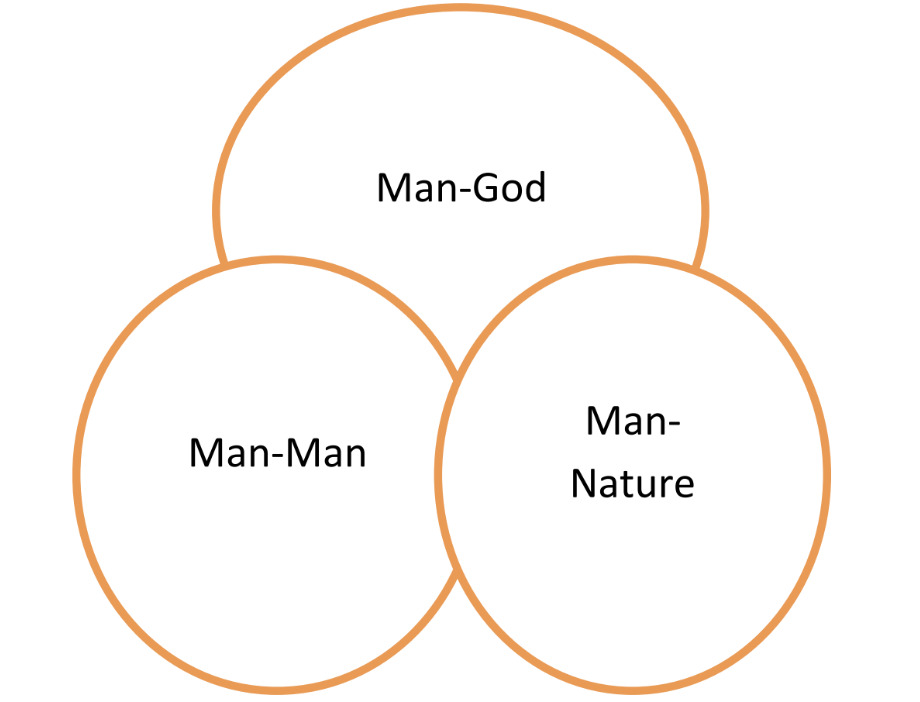
According to Oromo thought, legal knowledge is bifurcated into two distinct categories: the immutable law of God, which governs the creation and guidance of all things and events, and the mutable laws of human beings, which are subject to revision through consensus and democratic deliberation among community members (Jalata 2010, 15). Within this framework, the Oromo religious and political systems are deeply interwoven under the Gadaa System—a comprehensive indigenous institution of governance. In that, the Gadaa System facilitates the orderly transfer of power every eight years, assigning generational roles and responsibilities based on age and social grade (Haile 2009). Religion and religious practices also reinforce each other where the political philosophy encompasses initiation, participation, democratic power-transfer and shared political practices. This highly coincides with the nexus between social and natural laws in Oromo viewpoint. Oromo World View is Man-to-God; Man-to-Man, and Man-to-Nature which could be portrayed as under:
.png)
So, the Oromo identity is surrounded by three forms. To illustrate a bit, in the first place, there is a very strong relation between man and God, which is also termed Waaqa that is all-making, superior and all-decisive. In the middle position, there is a man-to-man relation which follows from and is guided by man’s relation with God. The third is man’s relation with nature or the natural environment, based on the abiding law of nature that is shared in the social realm as well. Exemplary in this regard could be reception for guests. When a guest comes to pass a night at Oromo homestead, there is a way of reception:
The Guest: Warra manaayee! (Dear householder!)
The Host: Oo yee! (Yes!)
The Guest: Keessummaa yoonaa hin jaallattanii? Addun nutti dhiitee; nu bulchaa! (We are guests seeking lodge! The sun has gone down! Could you allow us in?)
The Host: Maaf jibbina ? Nooraa, manni kan Waaqii! Goraa; bulaa! (Please, come in! It is God’s lodge! Let you be with us in peace!)
The Guest: Tole kaa, gaariin haa nooru! Kan dhalate mana haa bulu! Kan hortan dallaa haa bulu! (Ok. May your holdings be in peace forever (Author’s personal experiences with the community).
No Oromo says “It is mine!” He or she says, “It is God’s house!” That means, Oromo lives and abides by the fear of God. One can imagine how the sense and spirit of community works in the egalitarian system which the educated strata never recognize. An Oromo of good standing does not bypass someone in trouble. He or she renders support as much as s/he can. This is one aspect of humanity in rendering support. When serving his cattle with water from the well (commonly known as Eela, meaning well), Oromo arranges a special place for the wild animals to drink, too. This is common among Borana and Guji Oromo. That signifies the utter love and oath Oromo has for human beings and the wild creature in the name of God. Quite scientifically, that type of care also goes with the retaining of biodiversity (Homewood, Trench, and Brockington 2012).
Within the Oromo belief system, Waaqeffannaa is guided by divine revelation imparted to spiritual leaders known as Qaalluu (prophets) and Ayyantu (disciples). Their roles closely parallel those of prophets and disciples in Christian traditions, particularly in their function as stewards of worship and moral guidance. These figures shape human conduct and the relationship with Waaqaa (God) through a framework of five foundational laws (Wami 2015, 221–223). The first, Waaqeffachuu, refers to the act of worship, which includes the offering of prayers daily and as needed. The second, Laguu or Lagachuu, involves abstention from prohibited actions such as retributive killing, theft, and the consumption of crawling creatures or the flesh of non-ruminant animals, including equines. Comparable restrictions are found in the Christian tradition, particularly in the Book of Numbers, Chapter 6, which outlines purity commandments for those consecrated to serve in the Holy Synagogue. While the theological foundations differ, the Oromo religious system reflects a culturally distinct but structurally analogous approach to spiritual ordination and moral discipline.
The third pillar of Oromo customary law is Safuu, a moral code that underscores reverence for God, elders, and the self, while promoting wisdom in the respectful treatment of both women and men. Seera Safuu, or the moral law, also calls for deference to spiritual figures such as the Qallus and Ayyantus, particularly in moments of instruction, guidance, or ceremonial presence (Lewis, 2025,p.171). The fourth pillar emphasizes respect and care for the Ulfoo—entities regarded as sacred or venerable—including natural landmarks such as rivers, streams, mountains, and hills. This reverence extends to symbolic elements like the Odaa (oak tree), a traditional site for communal assembly, and the Bokkuu, a scepter viewed as a divinely sanctioned emblem of authority, inscribed with symbols representing both masculine and feminine principles. Additional sacred objects include Dooqa (cowry shells) and Callee (beads), which signify spiritual union with Waaqaa (God), as well as the thirty-three named human body parts collectively known as Horo, meaning “one who produces offspring” (Wami 2015, 223). Other revered items include the Kallacha, a forehead emblem worn by Gadaa leaders to denote authority, and the Caaccuu, the intricate embroidery adorning their ceremonial garments, both of which carry deep symbolic and spiritual significance within the Oromo tradition.
Furthermore, Siinqee serves as a symbol of honor and agency for every Oromo woman, while Qanafaa represents the respect accorded to women during the postpartum period. Both are considered Ulfoo—sacred and venerable elements within Oromo cultural law. In cases of domestic abuse, a woman traditionally signals distress by crying out publicly, prompting the Haadha Siinqees—female elders responsible for oversight and justice—to mobilize a collective response. The women’s assembly does not disperse until justice is served, and the offending husband is held accountable through the Shanacha, a council composed of representatives from five households. Similarly, a woman in her maternity season is protected from physical punishment and exempted from strenuous labor, regardless of any perceived faults.
The fifth pillar of Oromo customary law is Hooda, which denotes the acceptance of divine will. This principle calls for spiritual submission in the face of life’s inevitable hardships, such as the death of loved ones, natural disasters affecting livestock, or sudden fatalities caused by lightning or plague. Hooda reinforces the belief that certain events lie beyond human control and must be met with humility and faith in Waaqaa’s overarching wisdom.
4.2 Centers of Worship in Oromo Tradition
The Oromo society maintains several institutions within its Gada System that facilitate the performance of Gada rituals and religious ceremonies, including Irrechaa (a seasonal thanksgiving) and Ateetee (ceremonies promoting productivity) (Haile 2009, 78). Central to these practices are the Odaa Assemblies, which serve as symbolic and functional centers of communal and spiritual life. To date, five major Odaa centers have been established across various regions of Oromia—south, east, west, and central.
These include:
-
Odaa Roobaa, located in the Baalee Zone at a site known as Gindhiir;
-
Odaa Nabee, situated near Dukam in central Oromia, approximately 31 kilometers from Addis Ababa/Finfinne;
-
Odaa Bisil, found in Iluu-Galaan, West Shewa, about 175 kilometers from Addis Ababa;
-
Odaa Bulluq, in the Horro-Guduruu Zone of western Oromia;
-
Odaa Bultum, positioned on the eastern edge of Oromia in the Harerghe Zone (Hinew 2012).
According to Shellema Kebe (2016), the Odaa, or oak tree, is regarded as a one having a sacred shade where Gada leaders convene to enact foundational laws, functioning similarly to a senate hall. Shade for Oromo society is the symbol of union, peaceful discussion and concomitance. Chosen for its resilience to drought and evergreen nature, the oak tree provides a shaded, open-air space conducive to public deliberation. It is also valued for its reputed ability to repel venomous creatures such as snakes and to support the growth of other plants without causing harm.
Odaa assemblies are held both at individual locations and collectively by the council of Gada leaders when critical decisions must be made or new laws codified. These major gatherings occur at Gumii-Gaayyoo, the general assembly of Gada leaders. When geographic mobility poses challenges, communities are permitted to designate alternative Odaa sites that serve as proximate seats of assembly. For example, Odaa Makoodii (also known as Garaadoo) in Wollo and Odaa Birjaa in Gujii serve as additional centers of deliberation (Shellema 2016, 18–19).
From the above analysis, it can be concluded that, alongside a belief in one almighty God, Oromo society possesses structured mechanisms for regulating relationships among individuals and with the natural environment. The principles of Seera, as upheld by the Qallu (spiritual leaders), and the guidance of Ayyaana (spiritual prophecies) conveyed through religious ministers, inform the societal norms governing production, resource stewardship, defense, and family life.
Waaqeffannaa and Oromo Institutions
In alignment with the law-making centers represented by the Odaa assemblies, Oromo society has developed a range of institutions that serve complimentary social, spiritual, and political functions. Among these are the Bokkuu Institution, Siinqee Institution, Shanacha, and Ayyaantuu, each playing a distinct role in the regulation of communal life and the preservation of cultural values.
The Bokkuu Institution (The Sceptre)
According to Haile (2009, 194), Bokkuu is a symbol of authority held by the Abbaa Bokkuu (respected leader), who is appointed to oversee ceremonial functions, mediate conflicts, organize defense, promote peace, and deliver other essential social services. In human history, centuries of exchange marked the quest for ceremonies be it for adoring the creator, God, or to deliver sacrifices. Oromo gives a peaceful shape to leadership through Bokkuu. The other social responsibility in Oromo which Abbaa Bokkuu handles is conflict resolution, which is an inevitable social issue as far as people possess lands and other endowments. The Abba Bokku hears cases in a socially accepted manner, and is heard in return by his people; such that conflicts are handled without aggravating to further violence (Hussein et al. 2020).
Possession of the scepter signifies the leader’s capacity to command—whether to initiate or prohibit actions within the community. Similarly, Kebe (2016) describes Bokkuu as an emblem of administrative power, particularly in matters of governance, defense mobilization, and dispute resolution.
The Siinqee Institution
Siinqee is a symbol of fertility and empowerment—a ceremonial stick held by married women to assert their rights and preserve their womanhood within the framework of the Gada system. According to Alemayehu Haile (2009, 196), women begin practicing with Siinqee at home, although they are permitted to exercise their full social role only after marriage. Upon leaving her parental home, a bride receives the Siinqee blessing from her mother, symbolizing hopes that she will become a good wife, wise mother, and productive member of her community. Women bearing Siinqee also play important roles in blessing warriors during times of defense and in mediating conflicts; particularly, when disputes arise unexpectedly or without just cause (Fiqiruu 2018).
The Qallu Institution
The Qaallu Institution serves as the spiritual and moral center for Oromo religious leaders, who hold both symbolic authority and a social mandate to uphold democratic values and resist tyranny. These leaders, known as Qallus, draw upon their spiritual heritage to promote harmonious and democratic relations grounded in the belief in one supreme deity, Waaqaa (Jalata 2010; Haile 2009). Within the Qaallu Institution, principles such as social justice, divine law, the rule of law, and equitable distribution of power are maintained with impartiality; religious leaders refrain from aligning with specific factions or interest groups. Core ethical and spiritual concepts—Safuu (moral integrity), Ka’oo (aspirational wishes), Human Waaqaa (divine power), and Uumaa (the interconnectedness between humans, God, and other living beings)—are central to the institution’s teachings and practices.
Above all, while the Bokkuu and Siinqee institutions primarily serve social functions, the Qaallu Institution is fundamentally religious in nature.
The Ateetee Institution
Ateetee, the women’s ritual, is held at different seasons of the year as a signifier of thanks-giving. Largely known for its ritual feature of owing thanks for fertility, Atetee is also held to celebrate the end of a farm or to pour blessings on herds. To elaborate, the March Ateetee is held to pour blessings on children whereas the August Ateetee (Ateetee of the seed) is held to celebrate the ending of farm-season (Nugusuu 2024).
Ateetee Loonii (feast of the cattle) is held in March by planting a tree termed kormoomsaa in the center of the corral after the cattle barn is substituted. The barn is made more like a bridal hall that day; whereupon the female householder sprouts grass under the male. When the cattle blessing (dhibaayyuu kormaa) ceremony is completed, cattle to be slaughtered are brought out to be presented as a sacrificial sort. The husband slaughters what he has prepared for the festival, smears the blood to the left and right corners of the barn. The other ceremonies are held with the skin of the slaughtered animal spread and tied or wrapped around the legs and head of the cow. The ceremony winds up with a festival of eating the meat and drinking homebred beer (locally known as “farsoo!” (Balcha 2022; Temam 2019)).
Oromo Worldviews
The supreme source of power in Oromo cosmology is God, referred to as Waaqa Tokkicha, meaning “One God” who has neither likeness nor equal. According to Addisalem and Rajan (2018), the Oromo conceive of God as an impartial and all-encompassing being who hosts all without discrimination. In blessings and prayers, God is invoked with expressions such as “Danda’aa obdii bal’aa”—“the mighty and powerful holder of vast dominion”—and “Abbaa ifaa fi dukkanaa”, meaning “the bearer of daylight and darkness.”
Badassa asserts Oromo view of God as One Mighty Power-Bearer, which evolves from the people’s view of the deity as non-reproducing, non-replaceable and non-moving as set follows: “The Oromo believe in and worship a supreme being called Waaqaa - the Creator of the universe.” In this quotation, Oromo not only believe in their hearts but also worship overly tracing God as supreme creator of the universe. This highly relates with the Biblical version in the Book of Genesis which portrays God’s power to be an overall creator and provider of life to the lifeless. Some ritual and seasonal songs from the Oromo tradition delineate this fact:
“Abbaa Guungumaa koo! (Roaring God!)
Yaa Waaq nagaan ooltee? (How are you?)
Abbaa hundumaa koo! (All embracing God)
Sarseen lafa gootee (You made the swamp fertile!)
Sarxeen nama goote!” (And the lost active!)
(Author’s personal experience)
The ritual song presents God as having a mighty sound which shakes the earth. It is presented with adoration of God’s mightiness, embracing, enabling and empowering. Oromo also has a special recognition for Earth, and is called “Dachee !” To Oromo, Dachee (Land) means not just the soil but also identity, the cradle and cultural rooting. For that reason, Oromo sings by expressing beauty and provision of land through charming expressions as under (author’s experience):
Ati jirtaa dachee? (My land, are you fine?)
Dachee gameettii koo! (My land, the dexterous provider!)
Dachee ba’eettii koo ! ( A smart caregiver !)
Hundaa magarsitaa ! (You make all fertile!)
Namaaf dabarsita ! (And make life fine!)
Jiraa keenya baattaa (You hold us up in life !)
Ni ulfaate hin jettu (Never feeling tired or so!)
Du’aa keenya nyaattaa (You hold us after life!)
Ni xiraa’e hin jettu! (Never dread us so!)
Dureessa jaallattee (You never favor the rich!)
Isa shittoo qabu! (One well-perfumed!)
Hiyyeessa hin balfitu (And dread the poor!)
Isa cittoo qabu! (Who’s utterly fumed!)
Dachee ! (My Land!)
Complementing this divine presence is the concept of Ayyaana, understood as God’s eternal grace and creative force. Ayyaana is the way through which Waaqa creates everything, not only mankind; in that, for every nature, there is a given Ayyaanaa (spirit) from Waaqaa (God). Ayyana (the spirit ordained by Waaqa) is believed to mediate between man and God. Ayyana also mediates between God and nature/natural phenomena. For example, when there is heavy drought or shortage of rain, Oromo society members go to the Ayyantuu (a person who can forecast and mediate between the people and God) for a solution. It should be borne in mind that such people entitled Ayyaantuu can mediate between man and God through their prayers. That is how Ayyaana is taken as the spirit of mediation. The easiest way to state this is that God makes the way of reaching the creatures as well as man, through the spirit of Ayyana, as set in the Oromo belief system. The overall reflection is that the Oromo belief system, though largely oral, is philosophically all-rounded and inclusive (Gabbisa 2016, 3).
At places, Oromo represents people’s behavior in relation to Ayyaana given to animals. For example, someone endowed with the Ayyana of dog is believed to be gluttonous (kajeeltuu) whereas one who gets his food or sustenance at ease takes the semblance of the Ayyana of the hyena (Ayyaana Waraabessaa). Somebody who is always asked to serve others is related to a man of service with the servitude Ayyaanaa. In proverbs, it is stated as " Nama ayyaana ergaa dhalate, gabaatu harree qabsiifata" which, literally, means " Someone endowed with the Ayyaana of servitude is always asked to serve freely in handling pack animals." The term " Harree qabsiifachuu" designates handling a pack animal while loading and unloading; more peculiarly, when the animal is not easily tamed.
By and large, Ayyaanaa is believed to precede all existence and to actively guide, protect, and regulate the lives of God’s creations. Within the framework of Waaqeffannaa (the Oromo faith), Ayyaanaa functions as a spiritual force that governs circumstances and aligns with Safuu—the moral code and ethical disposition that underpins social norms and laws. Jalata (2010) emphasizes that Safuu constitutes the ethical foundation upon which all human actions should be based, directing individuals toward righteous conduct as ordained by divine power through Ayyaanaa. Thus, while Ayyaanaa pertains to the supernatural realm, Safuu reflects the moral principles embedded in Oromo social life.
The fourth foundational concept in Oromo thought is Namummaa (humanness), which refers to the inherent potential of individuals to cultivate meaningful and mature relationships—both vertically and horizontally (Jeo 2018, 5). The vertical dimension encompasses two key relationships: one between individuals, shaped by differences in age and social status; and the other between humans and God. The horizontal dimension pertains to interpersonal relations characterized by mutual respect, transparency, and self-reliance (Jeo 2018, 91).
Waaqeffannaa, Oromo Worship System
Derived from the Oromo term Waaqaa, Waaqeffannaa refers to the traditional belief in one supreme God—a spiritual system that has been preserved across generations (Bekele and Rajani 2018, 571). According to Tabor Wami (2015, 217), the Oromo people express reverence for their deity as Waaqa Gurraacha, meaning “Black God who resides in the Blue Sky.” In this context, the color black symbolizes both kindness and creative might.
Waaqeffannaa is practiced as an act of devotion to God, who is regarded as the sovereign of all events, the host of all creatures, and a being characterized by power, compassion, patience, and nourishment (Wami 2015, 218–219). In contrast to the worship of idols or carved representations, Waaqeffannaa emphasizes sincere reverence for the one true God who encompasses all existence (Desisa and Bingelli 2001).
Within this belief system, divine entities known as Ayyaanaa or Ayyaantuu are understood as manifestations of God’s true nature. The relationship between these spiritual forces and the Qaalluu—the religious ritualists—facilitates the transmission of divine messages to the community, akin to the role of a bishop or imam in other religious traditions.
The designated place of worship for Qaalluu rituals is known as Galma, a sacred site prepared for each Ayyaanaa or divine spirit. According to Desisa (2001), every Ayyaanaa is associated with its own Galma, where religious ceremonies are conducted. These sites are often situated on hilltops, mountains, or hillsides to ensure seclusion and protection from disruptive noise, thereby preserving the sanctity of the rituals.
Analysis of Textbooks for Early, Middle and Higher Grades of Oromo Students
Aligned with the practices and principles of the Oromo traditional religion and belief system, the following textbook analysis was conducted to examine how essential cultural values are represented in educational materials. The analysis was informed by research on the Oromo Gada System, which emphasizes values such as environmental stewardship, social well-being, political solidarity, and consensus-building (Efa Tadesse 2018). To assess the portrayal of the Oromo worship system, two Afaan Oromo textbooks—specifically those used in grades five and eleven—were selected for review.
Textbook for Grade Five
The Afaan Oromo textbook for grade five comprises twenty-six instructional units focused on personal practices and reader engagement. It includes 152 practice exercises that address a wide range of themes, such as personal dispositions and self-care, traditional tales, methods of production, environmental observation, responsible use and conservation of natural resources, health and hygiene, miraculous events, social communication, poetry, and the introduction of exemplary individuals and their deeds.
Although the textbook presents various themes related to personal and social development, it lacks explicit references to Oromo culture and belief systems. The exercises are primarily based on reading passages drawn from non-cultural sources, which tend to emphasize scientific and secular contents rather than spiritual or cultural values. This omission overlooks the rich oral tradition of the Oromo, which includes proverbs, idioms, songs, rhymes, and other spiritual expressions that transmit collective experiences across generations. These oral resources serve as powerful reflections of Oromo identity and belief, and could have been effectively integrated into the curriculum to reinforce cultural continuity.
Historically, the Abrahamic faiths were transmitted through oral traditions before being codified in written form—a process similarly observed in Oromo society. However, the oral transmission of Oromo cultural knowledge has been increasingly disrupted, in part due to the diminishing opportunities for intergenerational dialogue within the home. This breakdown is often attributed to a misplaced expectation among parents that formal schooling alone will provide all necessary learning, coupled with a perceived disconnect between cultural heritage and the school environment.
Afaan Oromo for Grade Seven
Published in 2022, the Grade 7 Afaan Oromoo textbook encompasses a range of thematic content, including the appreciation of natural beauty and resources, family planning, social harmony, Oromo artists, water resources, oral poetry, charitable practices, addiction hazards, patriotism, and migration. The first chapter, focused on the admiration of natural habitats, features two subtopics: Sof-Umar Cave and the Me’ee-Bokkoo Council (Jila Me’ee-Bokkoo), presented respectively as listening and reading materials. These readings and accompanying exercises offer insights that enhance cultural understanding. However, comparable culture-related exercises are notably absent from other chapters, such as those addressing family planning, water resources, charity, and addiction, indicating a lack of consistent integration of indigenous cultural perspectives across the curriculum.
Textbook for Grade Eleven (Afaan Oromo)
In this section, the representation of Oromo belief system and culture in the students’ textbooks prepared for teaching-learning in Oromia has been assessed. In the process of the assessment, textbooks for Grades 7, 9, 10 and 11 were looked into, and chapter units were identified from the given headings. Afaan Oromo textbook for grade eleven contains seventeen reading units that address a range of topics, including foundational language skills, autobiography, human interaction with the natural environment, gender issues, folktales, globalism, the tourism industry, school dropout, Olympic sports, poetry, profiles of individuals within the Gada System, small-scale enterprises, global hunger, letter writing, and information processing. Among these, the unit referencing the Gada System offers a basic portrayal of Oromo socio-economic structures. However, it provides minimal engagement with the Oromo belief system. Specifically, references to Oromo religion—and to Waaqeffannaa in particular—are sparse, indicating a gap in the integration of spiritual and cultural dimensions within the curriculum.
Summary and Conclusion
Although Oromo people possess a longstanding legacy of contributing to global democratic thought through the Gada system—recognized as an egalitarian model of governance (Jalata 2010)—the domestic education system in Ethiopia offers limited space for the inclusion of Oromo traditional perspectives. This gap persists despite the explicit constitutional guarantee of religious and cultural freedom.
For instance, Article 27, Sub-article 1 of the Federal Democratic Republic of Ethiopia (FDRE) Constitution states:
Everyone has the right to freedom of thought, conscience and religion. This right shall include the freedom to hold or to adopt a religion or belief of his choice, and the freedom, either individually or in community with others, and in public or private, to manifest his religion or belief in worship, observance, practice and teaching.
This provision affirms not only the right to hold religious beliefs but also the right to practice and teach them—underscoring the legitimacy of integrating indigenous belief systems such as Waaqeffannaa into educational frameworks. The constitution states “Everyone” to have freedom of thought, conscience and religion. The Ethiopian tradition earlier than the constitution had not even considered the very existence of nationalities and people as “everyone” except the handmaid Amhara, whose language and culture overwhelmed the country for almost a hundred years or so. In that, the term everyone could mean, in the maxim, the prior exploiters, the exploited or those who stayed forgotten. At this point, it becomes rational to trace Oromo dictum saying " Daa’imni kan haati duutes, kan haati gabaa deemtes waluma qixa boossi," literally meaning " A baby whose mother has died and the one whose mom has gone to market cries alike." The advantage for the latter is, but, different. It is not the cry but the circumstance, which should have been and should be considered in the real sense.
The analysis reveals that Oromo society has made significant contributions to global ideology through its belief in Waaqaa (God) and its indigenous democratic practices. Notably, the Gada system has been recognized by UNESCO as a progressive and culturally rich governance model.
However, the inclusion of these values in formal education remains minimal. Evidence from Afaan Oromo teaching materials shows that only one chapter addressing the Gada system was included among 43 chapters reviewed across two grade levels. This highlights a critical gap in curricular representation and points to the need for a more deliberate effort to incorporate Oromo cultural and spiritual heritage into the national education system.
Recommendations
Recognizing the vital roles that religious and cultural values play in shaping children’s and youth development at large, and driven by a deep commitment to restoring the marginalized identity of the Oromo people, it is imperative that Oromo intellectuals—particularly those working in educational institutions, university faculty with Oromo heritage, and researchers investing in indigenous knowledge—remain actively engaged with the preservation and promotion of the Oromo belief system. In addition, regional bodies such as the Oromia Culture and Tourism Bureaus, along with international cultural and educational agencies, should prioritize efforts to elevate the Oromo belief system into a vibrant cultural framework. Such initiatives would ensure that future generations have meaningful opportunities to learn from and connect with their spiritual and cultural heritage.
Tremendous efforts have been made so far; however, further progress is essential. Policy-makers, researchers, and authorities must place greater emphasis on Oromo cradle resources, which hold the potential to serve as instruments of social advancement not only for Oromia, but for Africa as a whole. This vision could be realized through the systematic collection and promotion of Oromo indigenous arts and history, alongside the critical analysis of oral and written literature to enrich youth education. Furthermore, the establishment of research centers and cultural museums would provide institutional frameworks through which these resources could be preserved, studied, and transformed into sustainable industries. By elevating Oromo heritage in this way, Africa can harness a powerful foundation for cultural pride, economic innovation, and social progress.